How to Get Red Wine Stains Out of Bed Sheets Fast
A spilled glass of cabernet on fresh bedding feels like an instant disaster. Red wine pigments bind quickly to natural cotton, linen, and microfiber fibers.
Acting fast prevents dark anthocyanin pigments from setting permanently into your woven fabric. You do not need to throw away expensive sheets after a nighttime spill.
Household items can lift fresh and dried wine spots without ruining your fabric. This complete guide shows you how to get red wine stains out of bed sheets step by step.
Immediate Emergency First Steps for Fresh Wine Spills
The first five minutes dictate how easily the red pigment lifts from fabric threads. Never rub the spill with a dry rag. Rubbing grinds tannins deeper into yarn cores.
Follow these immediate emergency steps right after the spill happens:
Strip the sheet off your mattress immediately to protect your mattress topper.
Place a dry white cloth or paper towel flat beneath the wet stain zone.
Blot gently from the outside edges toward the center using clean paper towels.
Avoid hot water because heat cooks red wine tannins directly into cellulose fibers.
Keep the stained spot damp with cold water until you apply your lifting solution.
Salt Club Soda Red Wine Stain Emergency Removal
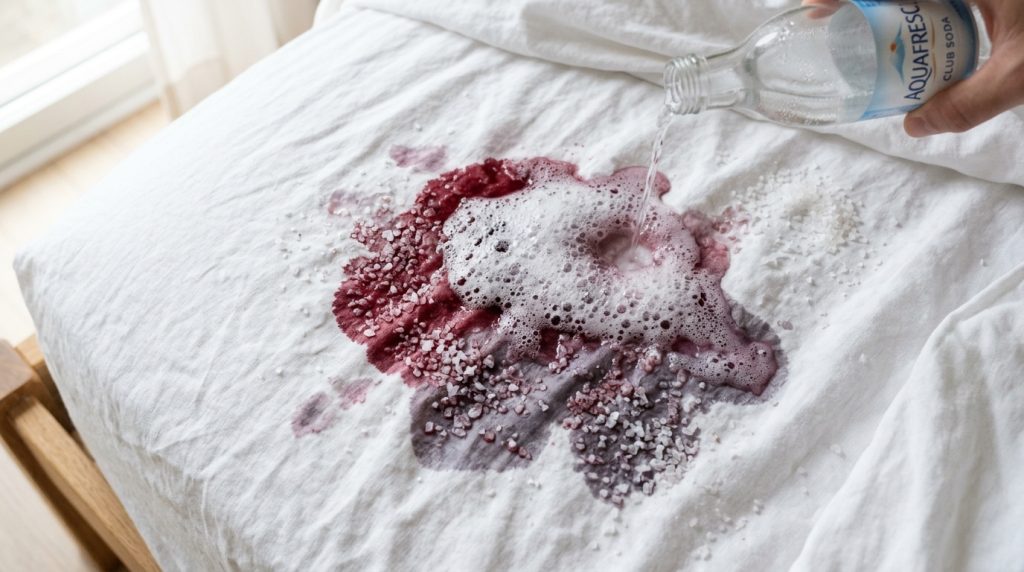
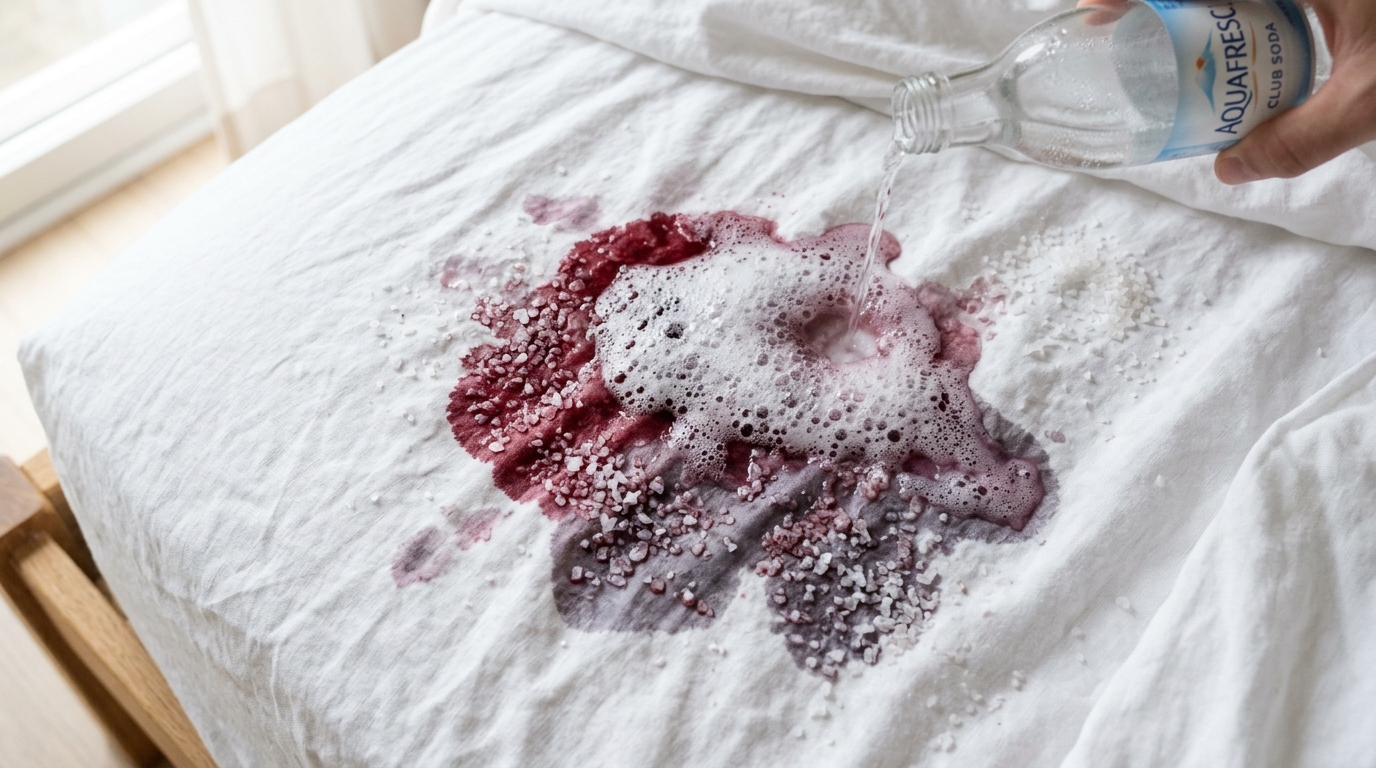
If you are caught without specialized spot cleaners, head directly to your kitchen pantry. You can perform a salt club soda red wine stain emergency removal within seconds of an accident.
Club soda contains mild carbonic acid and active carbonation. The effervescent bubbles lift dark red pigments out of tight fabric weaves before they oxidize.
Follow these simple instructions:
Blot away excess liquid until paper towels pick up no more dark red color.
Pour cold club soda generously directly over the entire stained perimeter.
Watch the carbonation bubble up red tannins from between the sheet threads.
Blot the bubbling area firmly with a clean cotton towel.
Pour a generous mound of fine table salt over the damp spill.
Table salt acts as an osmotic sponge. The mineral crystals pull wine-saturated moisture out of the cloth fibers over thirty minutes.
Once the salt turns pale pink and dries, scrape it off into a trash can. Rinse the fabric spot thoroughly with cold tap water.
Hydrogen Peroxide Dish Soap Red Wine Stain Sheets Formula
The ultimate solution for stubborn red wine marks is an oxygen-releasing soap mixture. Using hydrogen peroxide dish soap red wine stain sheets formulas destroys deep anthocyanin dyes.
Hydrogen peroxide breaks chemical bonds in chromophores that give red wine its dark hue. Standard blue liquid dish soap breaks down oils and grape skins.
Mixing Your Cleaning Solution
Mix these household ingredients in a small glass bowl:
Two parts 3 percent hydrogen peroxide.
One part liquid grease-cutting dish detergent.
Optional: three drops of fresh lemon juice for white sheets.
Swirl the ingredients together gently with a spoon. Do not shake violently.
Application Steps
Dab the peroxide solution directly onto the red marks with a clean sponge. Allow the liquid mixture to sit on the fabric for twenty to thirty minutes.
The deep red tint will shift to pale lilac, then yellow, and vanish completely. Blot the area with a damp cold washcloth to evaluate progress.
Reapply a small dab of fresh mixture if faint shadows remain visible. Rinse thoroughly under cold water before putting the sheet into the washing machine.
How to Remove Dried Red Wine Stains from White Cotton Sheets
Old spills require rehydration before stain lifters can dissolve dried pigments. You can remove dried red wine stains from white cotton sheets without chlorine bleach damage.
Chlorine bleach weakens cotton threads and can turn tannin residues pale yellow. Oxygen bleach and boiling milk treatments work far safer on delicate weaves.
The Warm Milk and Glycerin Soak
Vegetable glycerin softens crusty dried wine residues without damaging woven cotton. Rub pure glycerin over the dry stain and let it rest for thirty minutes.
Submerge the stained cotton corner in a bowl of warm whole milk for one hour. Lactic acid gently lifts tannin compounds while milk proteins bind the dye particles.
Rinse the fabric clean with lukewarm water. The dried stain will release smoothly into the rinse stream.
Oxygen Bleach Deep Immersion
Oxygen bleach powder provides safe color-safe brightening for tough dried stains. Follow this soak procedure:
Fill a utility bucket with four quarts of warm water.
Dissolve two scoops of sodium percarbonate oxygen bleach powder.
Submerge the stained white cotton sheets fully into the tub.
Allow the fabric to soak submerged for four to eight hours.
Inspect the fabric under daylight before moving to the washing cycle.
Step-by-Step Laundering Cycle for Wine-Treated Sheets
Once spot treatments lift the bulk of the pigment, wash your sheets correctly. One laundering mistake can set faint residue lines forever.
Follow these wash guidelines for optimal results:
Select a gentle or normal wash cycle using cold water only.
Add heavy-duty laundry detergent that contains active protease and amylase enzymes.
Pour one cup of distilled white vinegar into the fabric softener dispenser cup.
Avoid fabric softeners because synthetic coatings trap residual pigment odors.
Check the stain spot thoroughly when the spin cycle ends before opening the dryer.
Never place treated sheets into a heated dryer if you see any dark cast. Dryer heat bakes lingering grape tannins permanently into cotton yarn.
Hang the wet sheets outdoors on a clothesline in bright morning sunshine. Solar ultraviolet rays naturally bleach lingering botanical stains out of white bedding.
Stain Lifter Comparison for Bedding Fabrics
| Cleaning Method | Best Fabric Types | Action Speed | Risk Level |
|---|---|---|---|
| Salt and Club Soda | Cotton, Percale, Linen | Under 10 minutes | Low (safe for all) |
| Peroxide and Dish Soap | White Cotton, Microfiber | 20 to 30 minutes | Medium (test colorfastness) |
| Milk and Glycerin | Dried stains, Percale | 60 minutes | Very Low (gentle) |
| Oxygen Bleach Soak | White and colorfast cotton | 4 to 8 hours | Low (no fiber damage) |
| Distilled White Vinegar | Bamboo, Tencel, Silk blends | 30 minutes | Low (acid neutralizer) |
Mistakes to Avoid When Cleaning Wine Off Bedding
Many well-meaning cleaning attempts make wine stains worse. Avoid these common mistakes:
Never pour boiling water directly over delicate colored sheets.
Do not use bar soaps because bath fats bind tightly with wine tannins.
Avoid scrubbing vigorously with stiff bristle brushes that fray sheet yarns.
Never skip colorfastness testing on dyed sateen or dark patterned sheets.
Do not apply chlorine bleach directly to fresh red wine spills.
Frequently Asked Questions
Does rubbing alcohol remove red wine from cotton sheets?
Yes. Isopropyl rubbing alcohol dissolves wine pigments without leaving greasy residues behind. Pour alcohol over the spot and blot gently with clean paper towels.
Can baking soda remove red wine stains from sheets?
Baking soda works well when mixed into a thick paste with water. Spread the alkaline paste over the damp stain and let it absorb pigment for thirty minutes.
Why did my red wine stain turn blue or purple after soap treatment?
Red wine contains anthocyanins that react to changes in chemical pH levels. Alkaline soaps shift red pigment blue or purple. An acid like vinegar restores balance.
Is hydrogen peroxide safe for colored bed sheets?
Hydrogen peroxide has mild bleaching properties on dark dyes. Always test a hidden hem corner first before treating visible colored sheet surfaces.
How do you treat red wine on delicate silk pillowcases?
Do not use hydrogen peroxide or harsh detergents on natural silk. Flush the silk spot with cold water and treat gently using diluted silk-friendly detergent.