Duvet Cover Size Calculator: Match Your Cover to Your Insert
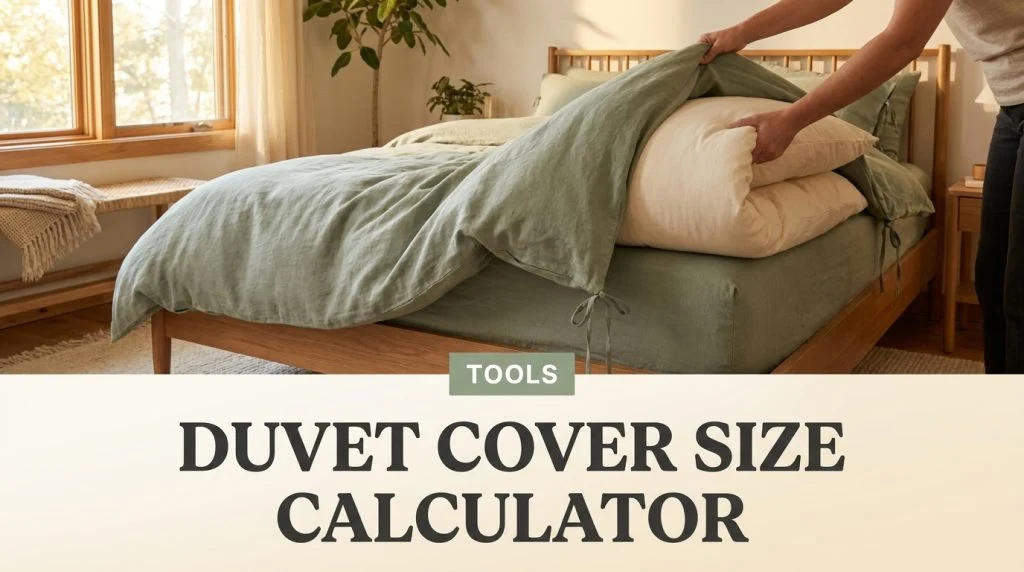
Duvet sizing isn’t one clean number the way sheet sizing is. A “Queen” duvet insert from one brand can measure 90×90 inches. Another brand’s Queen runs 95×98. Neither is wrong — the industry just never standardized it.
This calculator gives you a real size range for your bed size, not a false-precision guess. Pick your mattress size below and check the range against your insert’s own label.

Duvet Cover Size Calculator
Duvet dimensions vary by brand. Pick your bed size below to see the typical range, not a false-precision single number.
Recommended duvet cover range
Why duvet sizing isn’t “one number”
Bed sheets follow fairly tight manufacturing standards. Duvets and duvet covers don’t.
Casper, for example, sells a Full/Queen duvet at 95×98 inches. Other major brands sell a 90×90 Queen insert instead. Both get marketed as “Queen,” but they differ by 8 inches on one side.
That gap matters. A cover sized for one brand’s insert can leave the other brand’s insert swimming inside it, or too tight to close properly.
Down and feather inserts tend to run larger, since a fuller fill needs room to loft without dragging on the seams.
Budget microfiber sets often run smaller and flatter instead. Neither is wrong — they’re built for different fill types.
Duvet cover size chart by bed size
These ranges reflect real cross-brand variance, verified against multiple manufacturers. Always confirm against your specific insert’s tag before buying.
| Bed Size | Typical Duvet Cover Range (in) | Most Common (in) | Metric Range (cm) |
|---|---|---|---|
| Twin / Twin XL | 68–74 × 86–98 | 68 × 86 | 173–188 × 218–249 |
| Full / Queen | 88–95 × 88–98 | 90 × 90 | 224–241 × 224–249 |
| King / California King | 104–111 × 90–98 | 104 × 90 | 264–282 × 229–249 |
Notice that Full and Queen share one duvet size tier, and King and Cal King share another. That’s standard across the industry — unlike sheets, duvet manufacturing doesn’t split those sizes apart.
How to measure your duvet or comforter insert
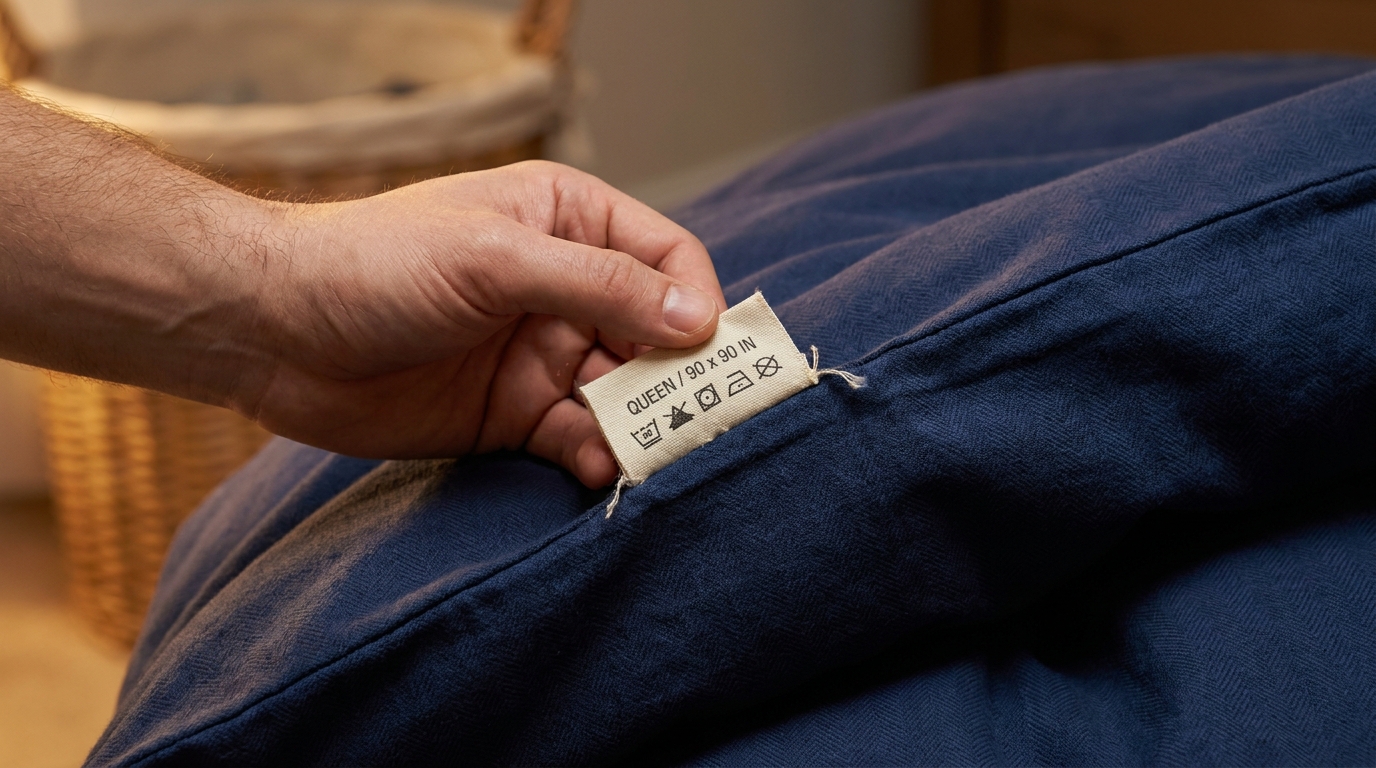
Lay your insert flat on the bed or floor before you buy a cover. Measure the width from side to side, then the length from top to bottom.
Write both numbers down. Compare them to the chart above, and add 1 to 3 inches of headroom when you pick a cover size — not more.
If you can’t find your insert’s tag, this measurement is the only reliable way to know its actual size. Never assume “Queen” means the same thing across two different sets.
Depth matters less here than with sheets, since duvets don’t wrap around a mattress. But thickness affects how the insert sits inside the cover. A thick, high-loft down insert needs a bit more interior room than a thin, low-fill synthetic one, even at the same width and length.
Matching insert to cover: pick the right fit style
A duvet cover works best when it’s roughly the same size as the insert, or just slightly larger. Too much extra room causes the insert to slide and bunch inside the cover.
Snug fit: Cover is within 1 inch of the insert’s dimensions. Best if you want the duvet to look flat and hotel-neat.
Balanced fit: Cover runs 2 to 3 inches larger than the insert. This is the range most shoppers should aim for.
Relaxed or oversized fit: Cover runs 4 or more inches larger. This looks fuller and fluffier, but needs interior corner ties or loops to keep the insert from shifting.
Whatever fit you choose, look for a cover with corner ties. They anchor the insert at all four corners and stop it from bunching into one end overnight.
Duvet vs. comforter vs. duvet cover
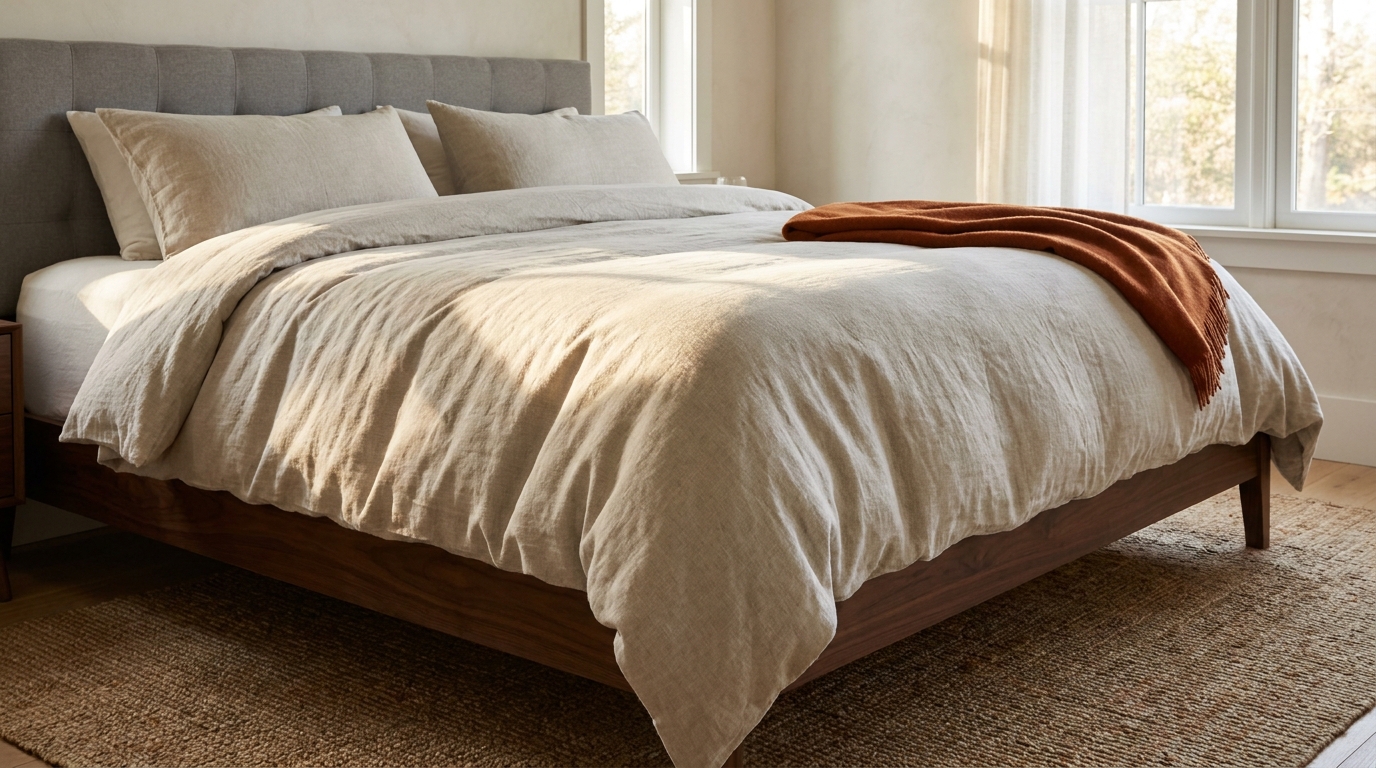
These three terms get mixed up constantly, so here’s the short version. A comforter is a single stitched piece, filled and finished, meant to be used on its own without a cover.
A duvet insert is also a filled piece, but it’s designed to go inside a removable, washable duvet cover. The cover is the fabric shell you actually see and wash.
If you want more detail on when to choose one over the other, our duvet cover vs. comforter guide walks through the full comparison.
There’s a practical reason duvet-and-cover setups have grown popular. Washing a full comforter takes an oversized machine and a long dry cycle.
Pulling off a duvet cover and tossing it in a normal wash load is far easier. It also lets you change the look of your bed without buying a new insert every time.
Frequently Asked Questions
Are full and queen duvets the same size?
Yes, in most cases. Full and Queen mattresses share one duvet insert and cover tier, typically around 90×90 inches, though some brands size it closer to 95×98.
Should my duvet cover be bigger than my insert?
Slightly, yes. Aim for 1 to 3 inches of extra room on each dimension. Much more than that, and the insert will bunch or shift inside the cover.
Do I need corner ties on a duvet cover?
They help a lot, especially with a relaxed or oversized fit. Corner ties or loops anchor the insert in place so it doesn’t slide down to one end during the night.
What is the difference between a duvet and a comforter?
A comforter is one finished piece you use directly on the bed. A duvet insert goes inside a separate, washable duvet cover, which is the part you see and change out.
How do I know what size duvet cover to buy?
Measure your insert directly, then match it to the chart above. If you don’t have the insert yet, use your mattress size as a starting range, but confirm against the actual insert once you have it.
Related reading
Fit style is only half the equation — fill weight is the other, and our guide on choosing duvet insert weight covers how to pick warmth to match your climate. If your duvet already keeps sliding around inside its cover, our guide on stopping duvet bunching has practical fixes you can try tonight.