Down Feather Comforters: A Real Buying Guide to Fill Power, Blends, and Care

Down feather comforters sound like one product, but “down” and “feather” are two different materials. Down is the soft, clustered plumage from underneath a duck or goose.
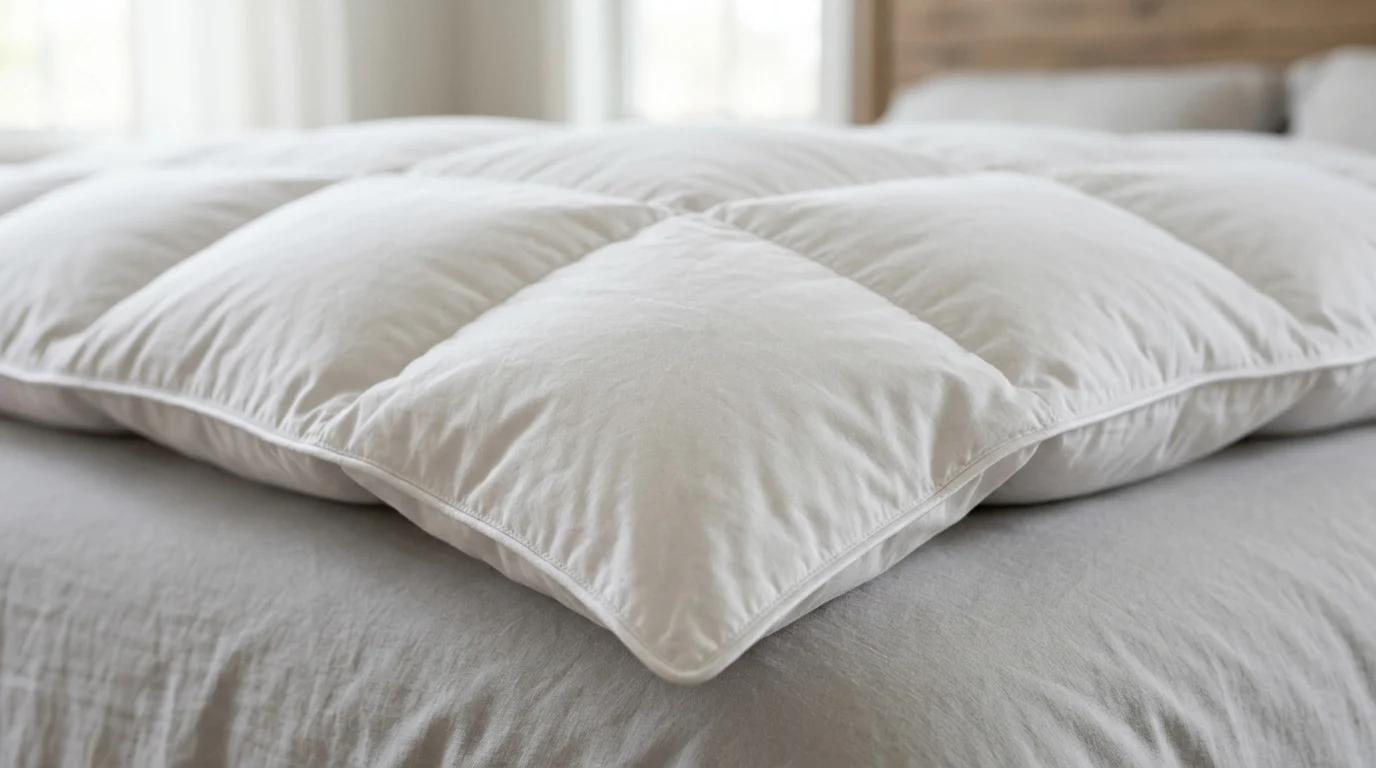
Feathers have a flat shape with a stiff quill running through the center. That structural difference changes how a comforter feels, insulates, and holds up over the years.
We researched fill power ratings, how down-feather blends actually differ, and what real brands like Pacific Coast and Cuddledown offer at each price tier. Here’s what actually matters when you’re comparing comforters.
(Affiliate link pending — this article will link to [Retailer] once the affiliate program is live.)
Down vs. Feather: What’s the Real Difference?
Down clusters trap air in their three-dimensional structure. That trapped air is what makes down such an effective insulator, and it’s why down-filled comforters feel light but still keep you warm.
Feathers are heavier and flatter, with a rigid quill that doesn’t compress the same way. A pure feather comforter costs less, but it’s noticeably heavier than one filled with down.
Feather fill also breathes less. Air moves less freely through flat feather structures than through fluffy down clusters, so feather-only bedding tends to trap more heat against the body.
Many “down feather comforters” on the market are actually a blend of both materials. Manufacturers add feathers to a down fill because feathers add structure.
That structure keeps the comforter from going flat over time. Pure down alone, without any feather support, can compress unevenly faster in a lower-quality construction.
Fill Power, Explained With Real Numbers
Fill power measures how many cubic inches one ounce of down expands to fill. A 550 fill power down is mid-range, and it’s common in accessible retail comforters.
Premium lines push much higher. Cuddledown, for example, sells comforters rated at 700, 800, and even 1000 fill power.
Higher fill power means the same warmth at a lighter weight. Higher-quality down clusters simply trap more air per ounce than lower-grade down.
That’s why a 700 fill power comforter can sometimes feel warmer than an 800 fill power one. It depends on how much total fill weight each comforter actually uses, not just the fill power number alone.
Fill power alone doesn’t tell you total warmth. You also need to know the fill weight in ounces, since that determines how much insulating material is actually inside the shell.
A reputable listing states both numbers. If a product page only advertises fill power and skips the ounce count, treat that as an incomplete spec.
Down-Feather Comforter Comparison
| Fill Type | Approx. Fill Power | Feel | Price Tier |
|---|---|---|---|
| Feather-only | Not rated by fill power | Heavy, flat, less breathable | Budget |
| Down-feather blend | 300–500 | Moderate loft, more affordable than pure down | Budget to mid-range |
| Pure down, standard | 550–650 | Light, warm, better breathability | Mid-range |
| Pure down, premium | 700–1000 | Very light, maximum loft, longest lifespan | Premium |
Real Brands Worth Knowing
Pacific Coast Feather Company has produced down bedding for over 140 years. It supplies many hotel chains directly, which is part of why “hotel quality” down bedding often traces back to this one manufacturer.
Its consumer comforters commonly use around 550 fill power. Higher-end models add baffle-box construction, which keeps fill from shifting into uneven clumps.
Cuddledown, based in Yarmouth, Maine since 1973, handcrafts comforters ranging from 600 to 1000 fill power. Its 1000 fill power European white goose down line sits at the top of what’s commercially available.
Prices at that top tier climb well past $600 for a queen-size comforter. Cuddledown’s more accessible 600 fill power line starts closer to $150, giving shoppers a real range to choose from.
Both brands use baffle-box construction on their warmer, higher fill-power models. A baffle box is an internal fabric wall stitched between the top and bottom shell.
That internal wall stops down from sliding to one corner. Without it, a comforter develops cold spots wherever the fill has drifted away.
How to Read a Down Comforter Label
Look for both the fill power number and the fill weight in ounces. A 700 fill power comforter with only 30 ounces of fill feels thinner than a 550 fill power comforter packed with 45 ounces.
Check whether the label says “down” or “down-feather blend.” A blend listed at, say, 70% down and 30% feather costs less but weighs more.
That same blend also traps slightly less warmth per ounce than pure down. It’s a fair tradeoff for shoppers prioritizing price over maximum loft.
Look for Responsible Down Standard, or RDS, certification if ethical sourcing matters to you. RDS verifies the down comes from farms that don’t practice live-plucking or force-feeding.
Care Instructions That Actually Work
Spot-clean small stains rather than washing the whole comforter whenever possible. Water can cause down clusters to clump, and clumped down loses loft even after drying.
For a full wash, use a large-capacity front-load washer. A top-load washer with a center agitator can tear the shell fabric or pull the seams apart.
Dry on low heat for several cycles. Add clean tennis balls or dryer balls to the load — they help break up clumps as the down dries and redistribute the fill evenly.
Many manufacturers recommend professional cleaning for comforters rated 700 fill power or higher. The finer down clusters at that tier are more prone to clumping in a home machine.
Always check the manufacturer’s specific care tag before washing at home. Some premium comforters void their warranty if you skip professional cleaning entirely.
Down Alternative: When It Makes More Sense
Down alternative comforters use synthetic microfiber fill instead of real down or feathers. They’re the better choice for anyone with a down allergy.
Even well-cleaned down can trigger reactions in sensitive people, since allergens can cling to the fiber structure regardless of washing. Down alternative fill removes that risk entirely.
Down alternative fill also machine washes more easily at home, without the clumping risk that comes with natural down. That convenience is a real advantage for busy households.
The tradeoff is a shorter lifespan. Synthetic fill compresses permanently faster than natural down, typically needing replacement every few years versus a decade or more for quality down.
Choosing the Right Warmth Level for Your Climate
Comforters are usually rated as summer-weight, all-season, or winter-weight. The rating is based on total fill amount, not fill power alone.
A summer-weight down comforter might use half the fill ounces of a winter-weight version at the same fill power. Hot sleepers or warm climates do better with a lower fill weight and a lower fill power, even if that means sacrificing some loft.
All-season weights work for most bedrooms that stay between 65 and 72 degrees overnight. Cold climates or drafty bedrooms benefit more from a winter-weight comforter.
Pairing that winter weight with a higher fill power adds warmth without excess bulk. Layering a lighter comforter under a duvet cover is also a flexible option for shoulder seasons.
Duck Down vs. Goose Down
Goose down generally has larger, higher-loft clusters than duck down. That’s why premium comforters tend to advertise “white goose down” specifically — larger clusters trap more air per ounce, pushing fill power ratings higher.
Duck down is more widely available and less expensive. Ducks are farmed at greater scale than geese for meat production, with down as a byproduct, which keeps supply high and prices lower.
A well-processed duck down comforter at 550 fill power performs comparably to a mediocre goose down comforter at the same rating. The species matters less than the processing quality.
Color matters less than the marketing suggests, too. White down is simply easier to clean and process without visible specks showing through a light-colored shell fabric.
Shell Fabric and Thread Count
The outer shell fabric matters almost as much as the fill itself. A tightly woven cotton shell, usually 300 to 600 thread count, keeps down clusters from poking through the fabric.
Textile makers call that poking-through problem “leaking.” A loose weave leaks down steadily over years of use, gradually reducing loft.
Down-proof fabric uses a dense weave rather than a coating. Coated fabrics trap heat and reduce breathability, undermining the whole point of down’s natural airflow.
Check whether the listing specifically calls the fabric “down-proof,” rather than just listing a thread count. A higher thread count shell also feels smoother against skin and holds up better over years of use.
Skimping on shell quality undermines even a high fill-power comforter. Leaking down reduces loft over time, regardless of how good the fill itself is.
Frequently Asked Questions
What’s the difference between down and feather comforters?
Down is the soft under-plumage from ducks or geese, prized for trapping air without much weight. Feathers have a flat, quilled structure, making feather-filled bedding heavier and less breathable.
What fill power is best for a down comforter?
Fill power between 550 and 700 suits most sleepers, balancing warmth, weight, and price. Higher fill power, like 800 or 1000, delivers maximum loft for less weight but costs significantly more.
Can you wash a down feather comforter at home?
Yes, in a large-capacity front-load washer on a gentle cycle, followed by several low-heat dry cycles with dryer balls. Higher fill-power comforters often do better with professional cleaning to avoid clumping.
Are down feather comforters good for hot sleepers?
Down breathes better than synthetic fill and regulates temperature more effectively. A high fill-power comforter can still run warm, so hot sleepers should choose a lower fill weight or a summer-weight option.
Is a down-feather blend worse than pure down?
Not worse, just different. A blend costs less and adds structural support so the comforter doesn’t go flat as fast, though it weighs more than pure down at the same size.
How long does a quality down comforter last?
A well-maintained down comforter with proper fill power and construction typically lasts 10 to 15 years. Regular spot-cleaning and occasional professional cleaning extend that lifespan considerably.
Why We Recommend Checking Fill Power and Fill Weight Together
We compared listings across Pacific Coast and Cuddledown while researching this guide. The biggest gap between a good deal and a bad one came down to fill weight, not just the advertised fill power number.
A comforter that lists only fill power, without stating the ounces of fill inside, is harder to judge fairly against a competitor. Always ask for both numbers before comparing price across two down comforters.
That’s the only reliable way to know if you’re actually comparing similar warmth levels. A cheaper comforter with a high fill power and low fill weight can still leave you cold on a winter night.
Our overall take: a mid-range 550 to 650 fill power pure down comforter, from a manufacturer that publishes both fill power and fill weight, is the sweet spot for most bedrooms. Save the 800-plus tier for buyers who specifically want the lightest possible warmth and are willing to pay for it.