Fabric Yardage Calculator for Bedding
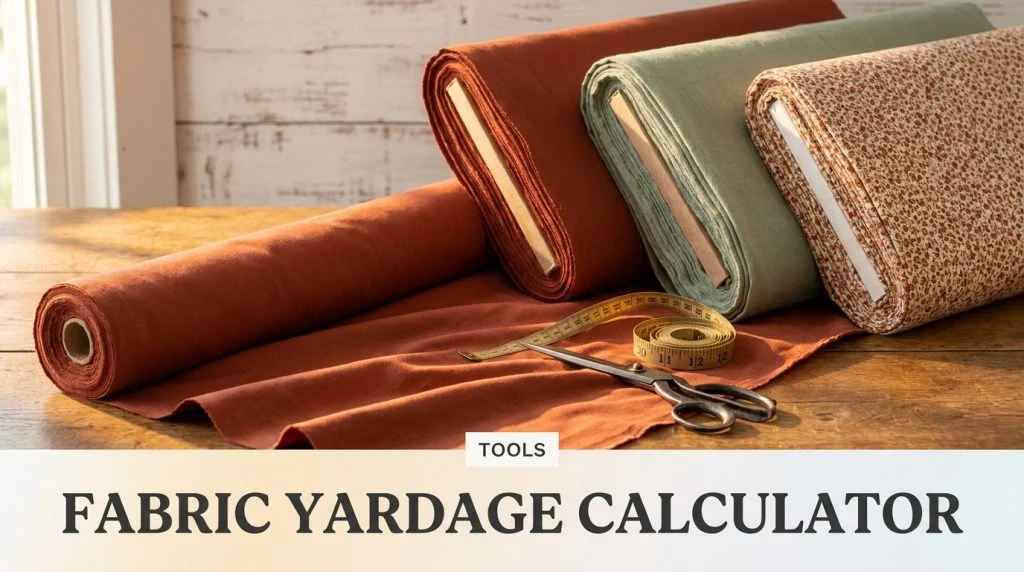
Fabric yardage for bedding depends on three things: what you’re sewing, your bed size, and how wide your fabric is. A Queen duvet cover alone can take 10-12 yards, while a Twin pillowcase needs less than a yard.
Guessing wastes money on extra fabric or forces a second trip to the store. The calculator below does the math for your exact project.
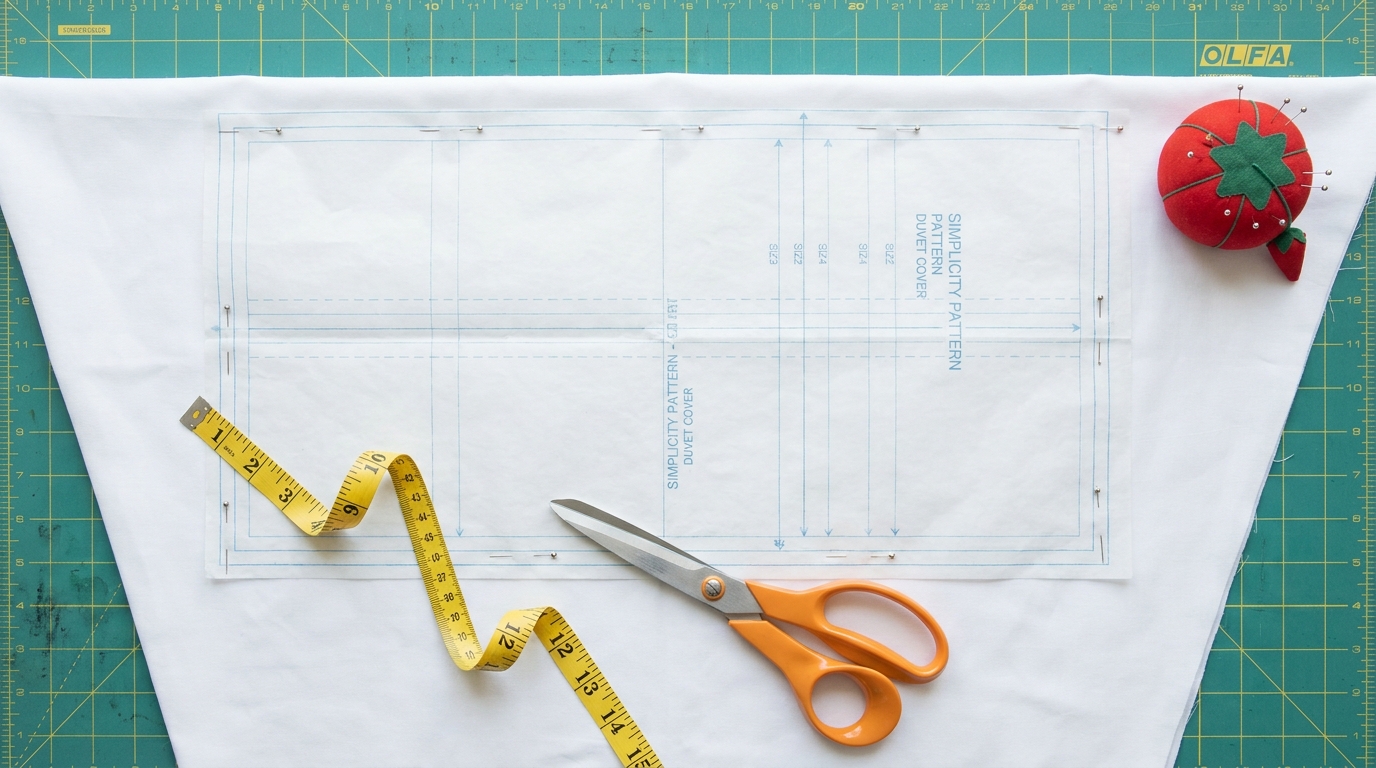
Fabric Yardage Calculator
Pick your project, bed size, and fabric width to get an estimated yardage.
Estimated yardage
–
Estimates only — actual needs vary with pattern repeat, seam allowance, and shrinkage. Add 10% buffer when buying.
How Much Fabric Do You Actually Need
These are verified Queen-size baseline figures at standard 54-60 inch decor-width fabric. Use them as a sanity check against the calculator above.
| Project | Queen Yardage (54-60in fabric) |
|---|---|
| Duvet cover (front + back) | 10-12 yards |
| Flat sheet | 2.5-2.75 yards |
| Fitted sheet | roughly 2.25 yards |
| Pillowcase, standard | 0.8-1 yard |
| Pillowcase, king | 1.2-1.5 yards |
| Bed skirt (14in drop) | 6-7 yards |
Twin needs less than these numbers. Full sits close to Queen. King and Cal King need more, since the mattress itself is bigger.
Why Fabric Width Changes the Math
Fabric width decides whether you sew one panel or piece two together. A duvet cover top is roughly 60-90 inches wide depending on bed size, so any fabric narrower than that needs a seam.
44-45 inch quilting cotton is the narrowest common option. Covering a Queen-width duvet top means joining two panels, which eats extra fabric in seam allowances and pattern matching.
54-60 inch decor-width fabric covers more of that span in one piece. That's why the baseline figures above assume this width.
108 inch wideback fabric, made for quilt backings, is wide enough to cover most mattress widths in a single cut. No piecing means no wasted overlap.
Avoiding the Center Seam with Wideback Fabric
Most sewing tutorials assume you'll piece narrower fabric to reach bed width, then hide the seam down the middle of the duvet or sheet. That seam is functional, not decorative.
Wideback fabric skips it entirely. At 108 inches, one width comfortably spans a Queen or King mattress top, so the finished piece has no visible center seam.
This matters most on solid colors and directional prints, where a seam interrupts the pattern. Striped or railroaded prints show a seam far more than a busy floral does.
If you've ever noticed a subtle line running down the middle of a store-bought duvet cover, that's the seam wideback fabric removes. Few fabric stores stock it beyond quilting shops, so check availability first.
Plan around it before you shop, not after.
How Fabric Yardage Scales by Bed Size
Fabric needs scale with the actual surface you're covering, not with a flat multiplier. For duvet covers, flat sheets, and fitted sheets, that surface is the mattress top: width times length.
A Queen mattress measures 60 by 80 inches. A Twin measures 39 by 75 inches, about 61% of the Queen's surface area. A King measures 76 by 80 inches, about 27% more surface than Queen.
| Bed Size | Mattress Dimensions | Surface vs. Queen |
|---|---|---|
| Twin | 39 x 75 in | 61% |
| Full | 54 x 75 in | 84% |
| Queen | 60 x 80 in | 100% (baseline) |
| King | 76 x 80 in | 127% |
| Cal King | 72 x 84 in | 126% |
Bed skirts scale differently. A skirt wraps three sides of the frame, so it tracks perimeter, not surface area. That's why a King skirt needs proportionally less extra fabric than a King duvet cover does.
Pillowcases don't scale with bed size at all. A king pillowcase needs the same yardage on a Twin frame as it does on a Cal King frame.
It's sized to the pillow, not the mattress underneath it.
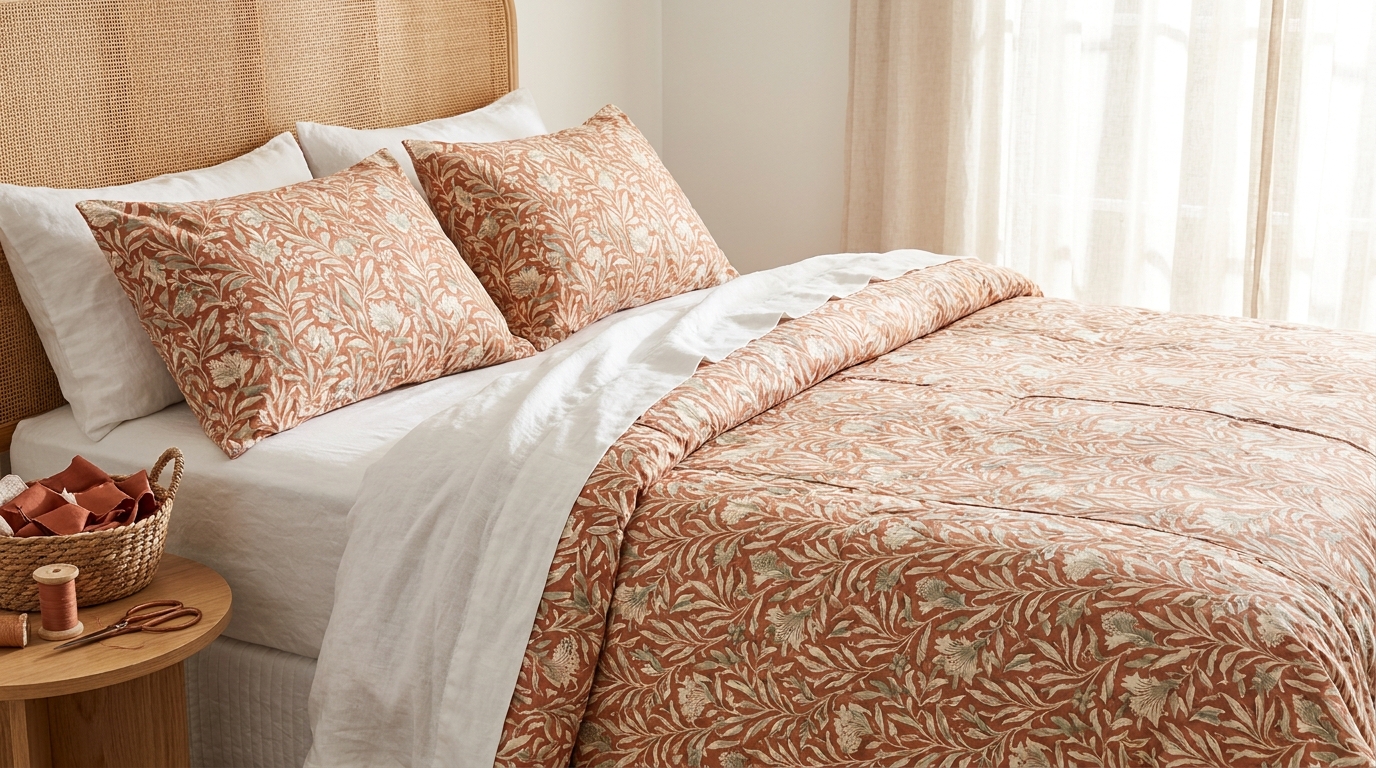
A Worked Example: King Duvet Cover in Wideback Fabric
Say you're sewing a King duvet cover and want to skip piecing. The Queen baseline is 10-12 yards at 54-60 inch fabric, and King needs about 27% more surface than Queen.
That pushes the raw estimate to roughly 13-15 yards before adjusting for width. Switching to 108 inch wideback removes the need for a seamed second panel, so the calculator trims that estimate down rather than adding to it.
The final number lands closer to 11-12 yards once wideback's single-width coverage is factored in. That's the kind of adjustment the calculator above handles automatically, instead of you eyeballing it at the cutting table.
Frequently Asked Questions
How much fabric do I need for a Queen duvet cover?
Plan on 10-12 yards of 54-60 inch fabric for both the front and back panels combined. Add extra if you're matching a directional print across the seam.
How much fabric do I need to make a Queen sheet?
A Queen flat sheet takes about 2.5-2.75 yards. A Queen fitted sheet takes slightly less, closer to 2.25 yards, since the corners are cut away rather than hemmed flat.
How many yards of fabric for a bed skirt?
A Queen bed skirt with a standard 14 inch drop needs about 6-7 yards. Twin and Full need somewhat less, King and Cal King somewhat more, since skirt yardage tracks the bed's perimeter.
Does wideback fabric really save yardage?
It saves piecing, not necessarily total length. The real benefit is a seam-free panel, which matters more for appearance than for the yardage total on your receipt.
Should I buy extra fabric beyond the calculator estimate?
Yes, add 10% for shrinkage, pattern matching, or cutting mistakes. Prewashing fabric before cutting also prevents surprises after the piece is sewn and washed once.
Once you know your yardage, fabric quality matters just as much as the amount. Our guide on how to choose bed sheet thread count breaks down what actually affects comfort versus what's just marketing.
If you're still deciding on fiber before you buy, our bamboo vs cotton sheets comparison is worth a look too.