How to Layer Bedding for Winter: The 7-Layer System for a Warm, Cozy Bed
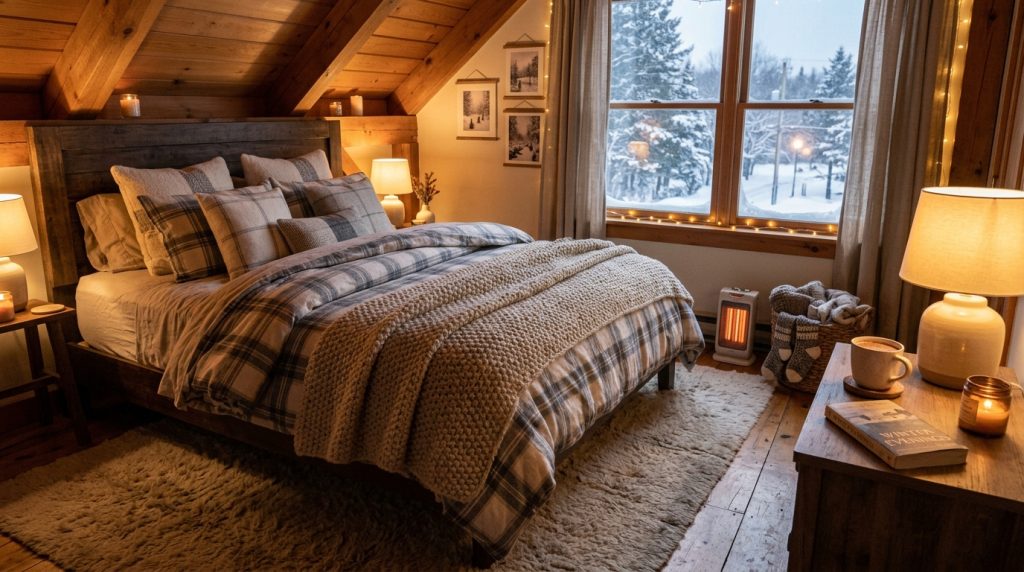
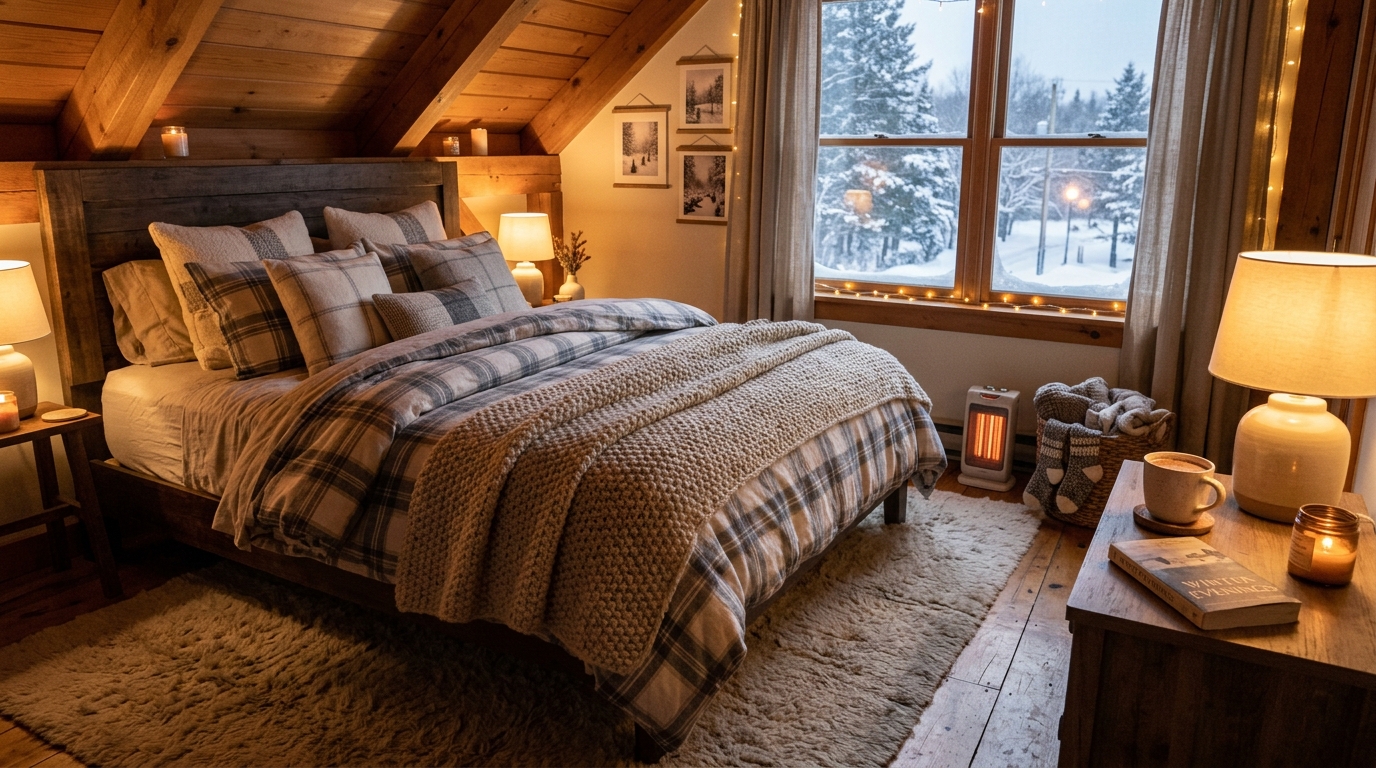
If your bed still feels cold in November, the fix is rarely one enormous blanket. A single heavy layer traps you in an all-or-nothing choice: sweltering at 11 p.m., chilly at 4 a.m. Learning how to layer bedding for winter properly gives you adjustable warmth instead — several thinner, well-chosen layers that trap heat in pockets of air, and that you can peel back one at a time as your body warms up.
This guide builds a winter bed in seven layers, from the mattress up. Each layer has one job, a spec to shop by (weight, GSM or thickness — not marketing words), and a note on who can skip it. At the end you’ll find adjusted versions for hot sleepers, guest rooms and tight budgets, plus the mistakes that make a layered bed feel bulky instead of cozy.
Before You Start: Two Numbers That Decide Everything
Your bedroom temperature. Sleep guidance commonly puts the ideal bedroom at roughly 60–68 °F (about 16–20 °C) overnight. Layer for the room you actually have, not the weather outside: a well-heated bedroom at 68 °F needs far less bedding than a drafty one at 58 °F, whatever the forecast says. If you don’t know your overnight temperature, a cheap room thermometer on the nightstand for two nights will tell you more than any product label.
How warm you sleep. Cold sleepers feel every missing layer; hot sleepers overheat under a winter duvet even in January. Be honest about which one you are — the layer counts below assume an average sleeper in a 62–66 °F room, and the adjustments section later shows hot and cold sleepers how to shift the system up or down.
One more principle before the layers themselves: warmth comes from trapped air, not weight. Lofty, brushed and quilted materials insulate because they hold still air next to your body. That’s why seven light layers outperform one dense, heavy blanket — and why a squashed, worn-out duvet stops working even though it feels thick.
Layer 1: A Mattress Topper — Insulation From Below
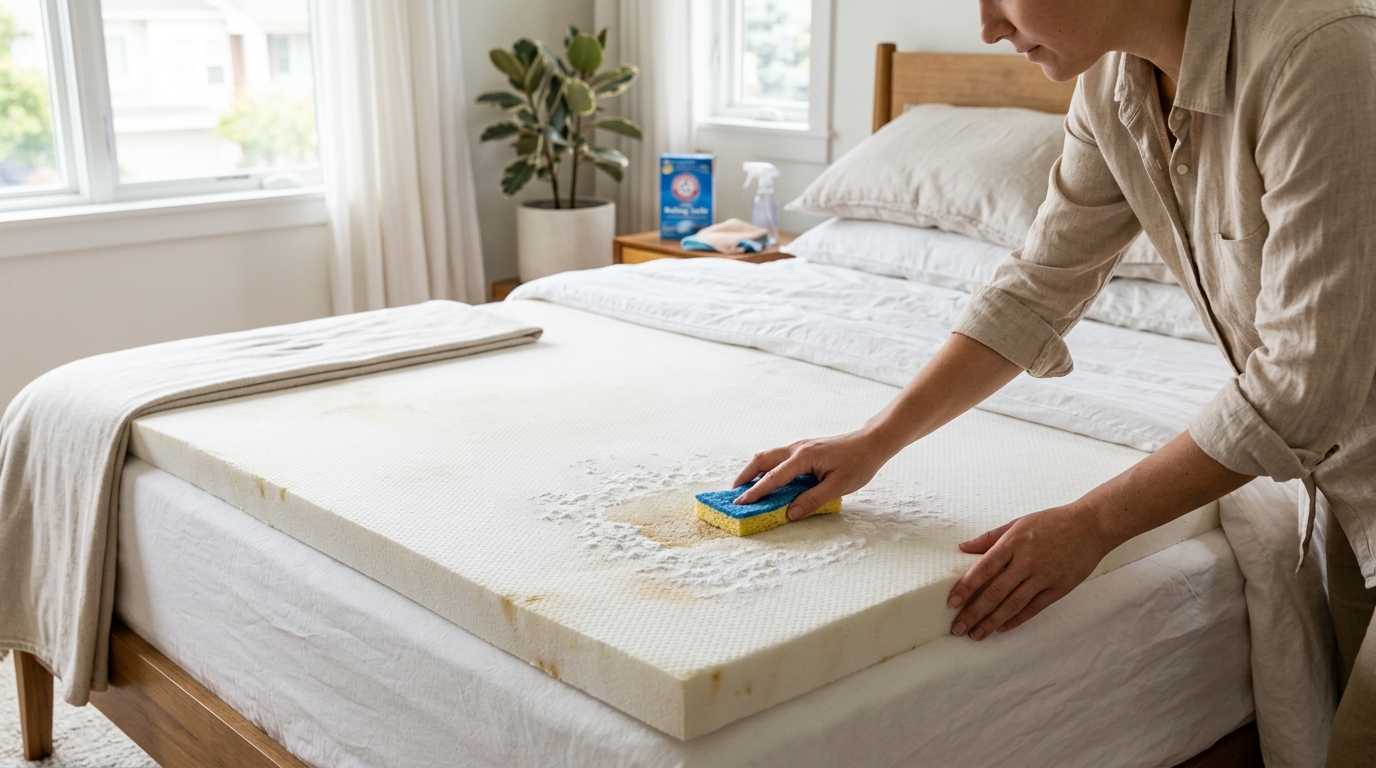
Most people pile warmth on top and forget the cold coming from underneath. A mattress — especially a foam one — pulls heat out of your body all night, and no duvet can fix that. A topper is the base layer of the whole system.
- Thickness: 2–4 inches is the useful range. Two inches adds noticeable insulation; 3–4 inches adds real cushioning too.
- Materials: Wool and fleece toppers insulate best for cold sleepers and regulate moisture well. Down-alternative (polyester fill) toppers are the budget-friendly middle ground. Memory foam adds comfort but can sleep warm — better for cold sleepers than hot ones.
- Fitted-sheet note: a thick topper adds height, so check your fitted sheet’s pocket depth (see Layer 2) before you buy.
Skip it if: your mattress is new, plush and already warm to sleep on. Everyone else in a cold room will feel this layer more than any other single change.
Layer 2: Warm Sheets — Where Flannel Earns Its Place
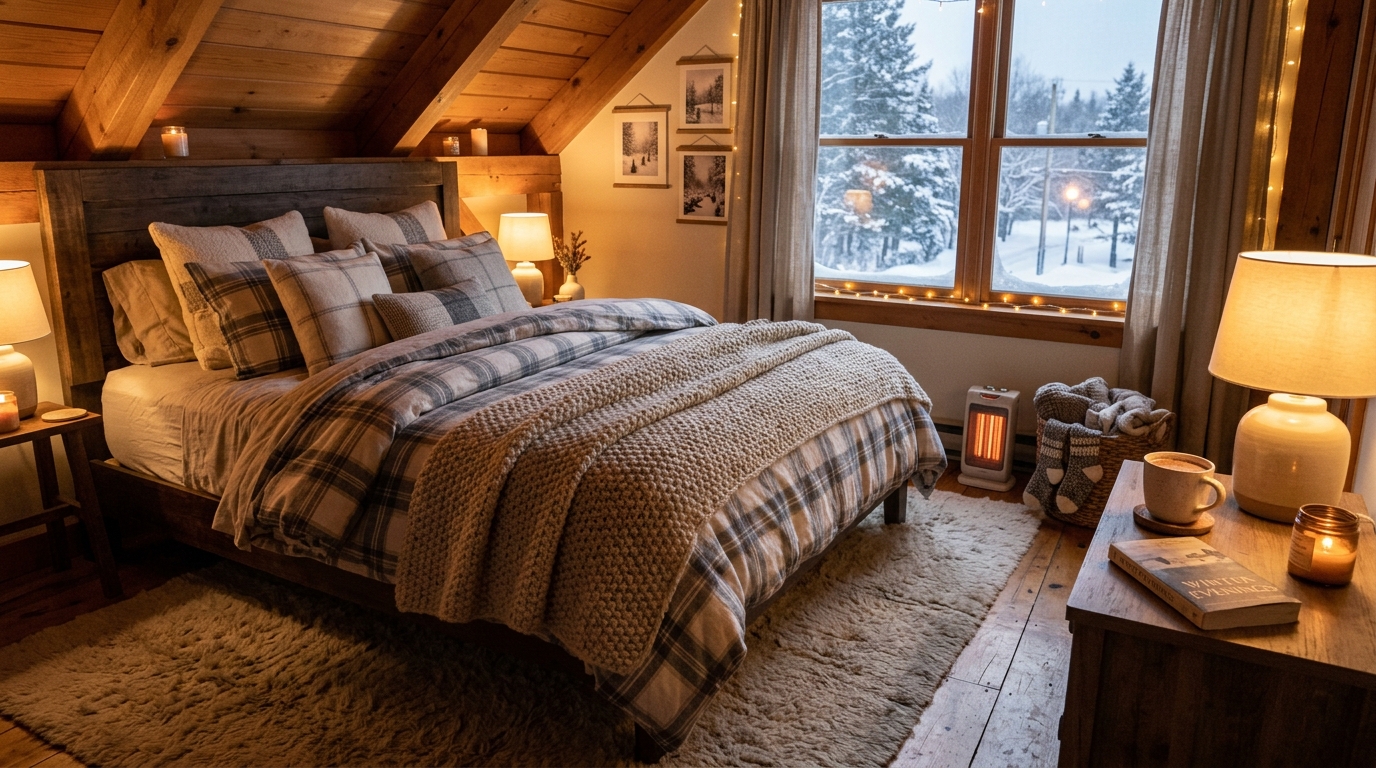
Sheets are the layer against your skin for eight hours, so this is where winter bedding is won or lost. The classic winter choice is flannel — cotton (occasionally wool or microfiber) that has been brushed to raise a soft, fuzzy surface. That fuzz traps warm air and, just as importantly, never feels cold on contact the way smooth cotton does at midnight.
Flannel is not sold by thread count — it’s sold by weight, in GSM (grams per square meter). Use these bands when you shop:
- Around 140 GSM — lightweight flannel. Good for mild winters, heated bedrooms and warm sleepers who want the flannel feel without much insulation.
- Around 170 GSM — midweight flannel. The sweet spot for most people: properly warm in a 60–65 °F room, still breathable. (For reference, traditional Portuguese-style flannels around 5 oz per square yard land in this class.)
- 190 GSM and up — heavyweight flannel. For cold rooms, cold sleepers and unheated bedrooms. Genuinely hot in a warm house.
Two practical checks:
- Pocket depth. Standard fitted sheets are typically cut for mattresses up to about 14 inches once a topper is on; deeper mattresses need 15–18 inch “deep pocket” sheets, which most winter sets offer — measure before ordering.
- Brushed on both sides wears softer and warmer than single-brushed. Expect good flannel to shed a little lint in the first washes and to soften over time.
Alternatives: brushed cotton (sometimes sold as flannelette) behaves much like flannel. Jersey-knit sheets feel T-shirt cozy and stretch forgivingly, but insulate less. If you run hot even in winter, stay with cotton percale here and take your warmth from the upper layers instead — our bamboo vs eucalyptus sheets comparison covers the breathable end of the sheet spectrum.
Typical cost: a decent cotton flannel set usually runs about $30–$90 for queen, with premium long-staple or Portuguese flannel sets reaching $120–$180.
Layer 3: A Flat Sheet or Light Blanket — The Adjustable Middle

This thin middle layer is the one people skip — and the one that makes the system adjustable. A flat sheet (flannel, to match Layer 2) or a light cotton or waffle-weave blanket sits between you and the duvet and does three jobs: it adds a surprising amount of trapped-air warmth for its weight, it lets you sleep under “something” on nights when the duvet alone is too much, and it keeps the duvet cleaner, so the big layer needs washing less often.
- Best materials: cotton, cotton waffle weave or a thin wool blanket — breathable, so this layer regulates instead of just adding heat.
- How to use it: on the coldest nights it goes under the duvet; on milder nights, fold the duvet to the foot of the bed and sleep under this layer alone.
Skip it if: you use a duvet cover and wash it weekly anyway, and your winter is mild. In genuinely cold rooms, keep it — it’s the cheapest layer and the hardest-working one per dollar.
Layer 4: The Main Duvet or Comforter — Your Primary Warmth
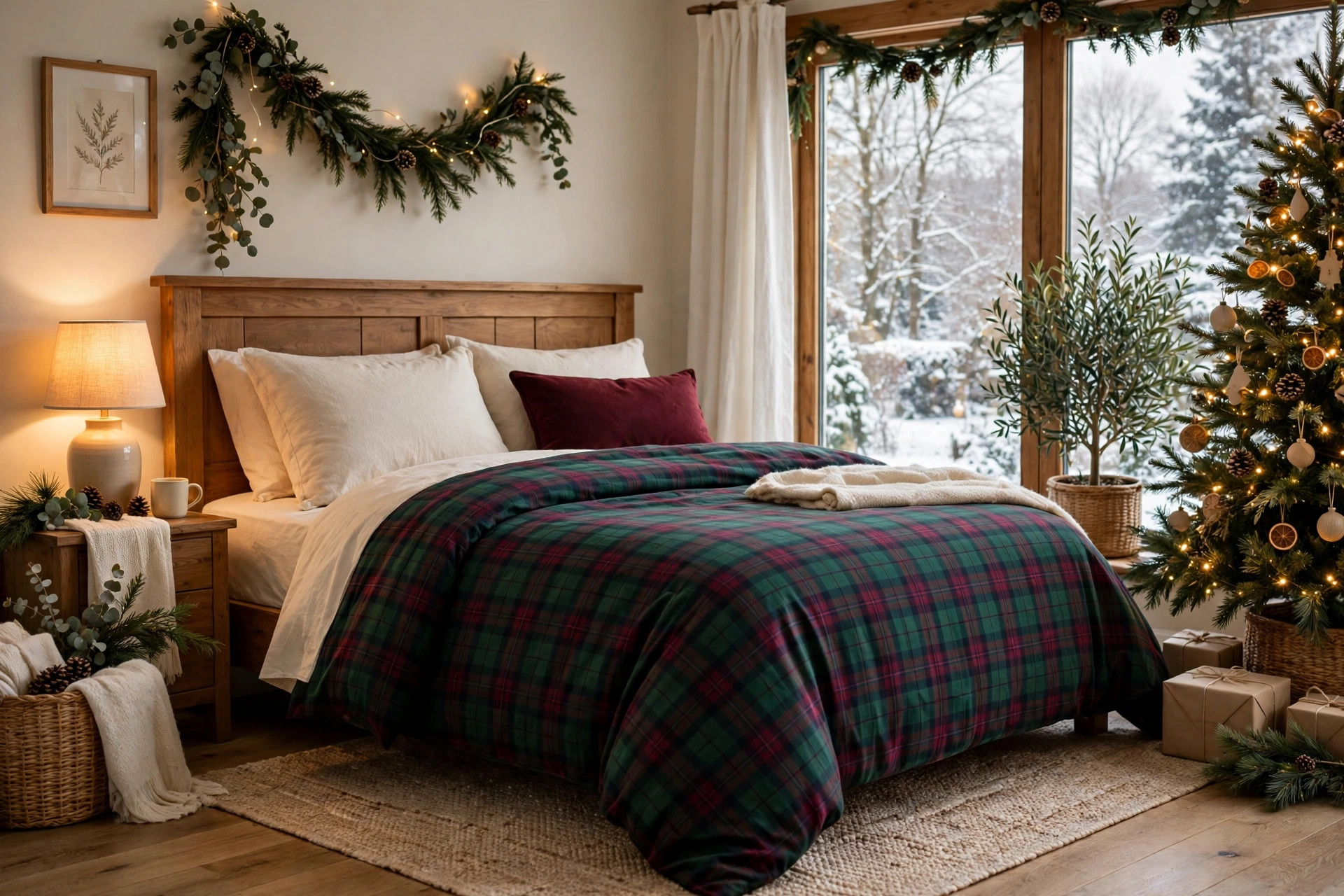
This is the layer that does most of the insulating, so it’s worth understanding how its warmth is measured — because US and UK labels speak different languages.
If you see a tog rating (common on UK and European duvets, and on some US imports): tog measures thermal resistance. The standard scale runs like this — 4.5 tog is a summer duvet, 7–10.5 tog suits spring and autumn, 13.5 tog is the standard winter weight, and 15 tog is for very cold rooms. For a typical heated US bedroom in winter, the 13.5-tog class (or its US equivalent below) is the target.
US duvets are usually sold by fill instead:
- Down: warmth is described by fill power — how much space one ounce of down fills. Around 550–650 fill power is good mid-winter warmth; 700–800 is premium warmth at very low weight. Down insulates superbly and breathes, but loses warmth if it gets damp and needs proper care (we cover how to wash a down comforter without clumping in a separate guide).
- Down alternative (polyester): sold by fill weight rather than fill power — for a queen winter comforter, heavier fills (roughly the “winter weight” or “extra warm” tier in a brand’s range, often around 45–60 oz of fill) are the ones to pick; the same brand’s “all-season” tier is usually a step lighter. Cheaper than down, hypoallergenic, and easier to wash.
- Wool: the underrated option — heavy, breathable, and excellent at evening out temperature swings for couples who sleep at different temperatures.
The flexible option — an all-season duvet set: two duvets (typically a light ~4.5 tog class and a mid ~9 tog class) that clip or button together to make a full winter weight. Three combinations from one purchase, and you can split them again the week the heating goes off. If you only buy one duvet this year, this format is usually the smartest money.
Size tip: for winter, size up. A king duvet on a queen bed drapes over the sides, seals in warmth and ends the midnight tug-of-war.
For a deeper look at fills before you spend, see our guide to down and feather comforters.
Typical cost: winter-weight comforters generally run about $60–$150 for down alternative and $150–$400+ for good down, depending on size and fill.
Layer 5: A Quilt or Coverlet Over the Top — Sealing the Warmth In
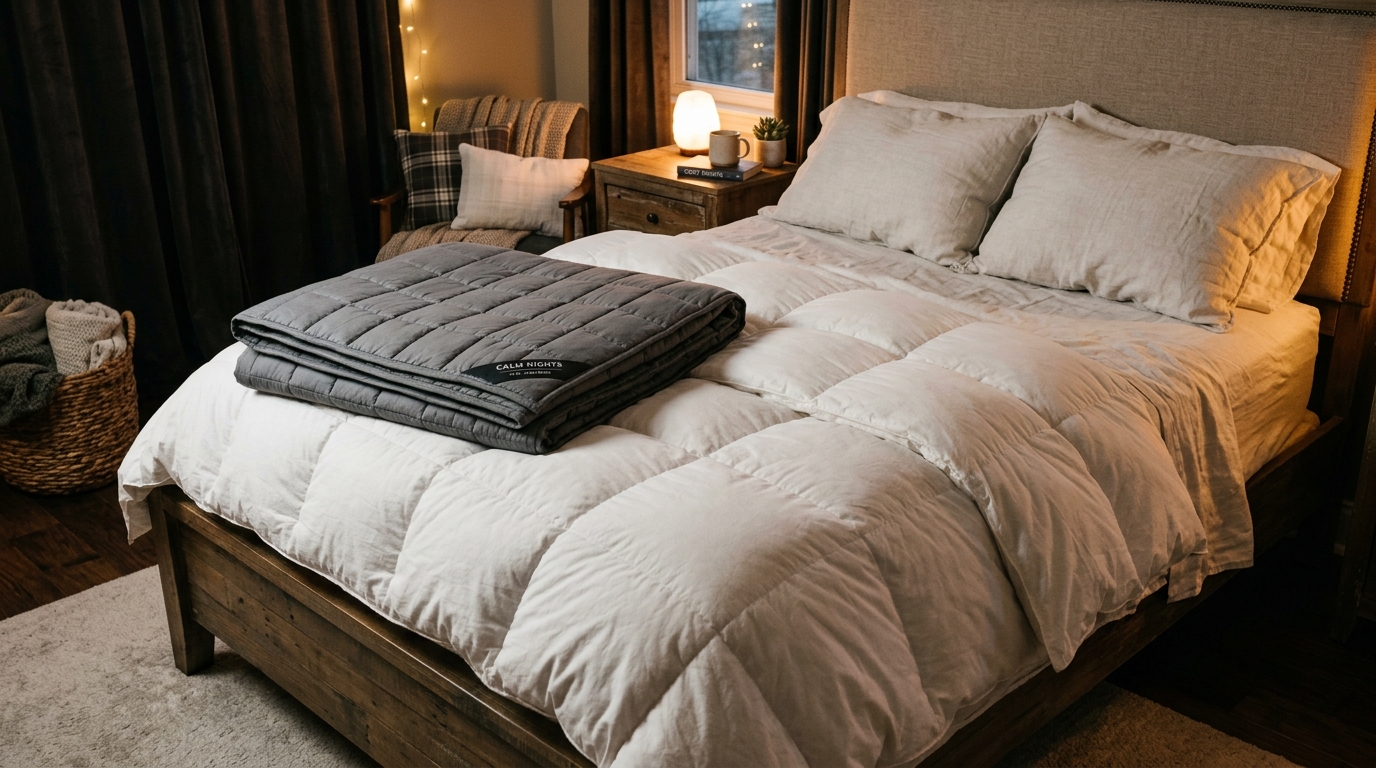
A quilt, coverlet or bedspread laid over the duvet looks decorative, but in winter it works for a living: it compresses the duvet’s edges down against the mattress, sealing the gaps where warm air escapes and cold drafts sneak in — the same reason a lid matters on a pot. It also protects the duvet cover from pets, snacks and general winter hibernation.
- Materials: cotton quilts are the most versatile (breathable, washable). Velvet and heavier woven coverlets add more insulation and the plush look that’s everywhere in this winter’s interiors coverage.
- How to place it: pulled up to the pillows on the coldest nights; folded to the lower two-thirds of the bed for everyday — it still seals the foot end, where most people feel cold first.
Skip it if: you chose a heavyweight duvet (Layer 4) for a small, warm bedroom. In that setup this layer is looks only.
Layer 6: A Throw at the Foot of the Bed — Targeted Warmth for Cold Feet

Feet get cold first and complain loudest, and heating the whole bed to fix them overheats everything else. The throw solves it locally. Fold a throw blanket in thirds across the foot of the bed, over the quilt — close enough to pull up over your legs on the coldest nights, easy to kick off when you warm up.
- Warmest options: chunky-knit throws (wool or acrylic) and faux-fur throws trap the most air; a fleece throw (typically around 200–300 GSM) is the lighter budget pick.
- Weighted option: some people swap the throw for a weighted blanket across the legs — the usual guidance is around 10% of your body weight for a full-size weighted blanket, so a leg-only throw version should stay lighter.
- Look: this is also the layer that carries your winter style — the deep greens, rust, plum and warm neutrals all over this season’s bedroom coverage can live in one washable throw instead of a whole new bedding set.
Layer 7: Pillows and the Finishing Layer — Drafts, Cases and Styling
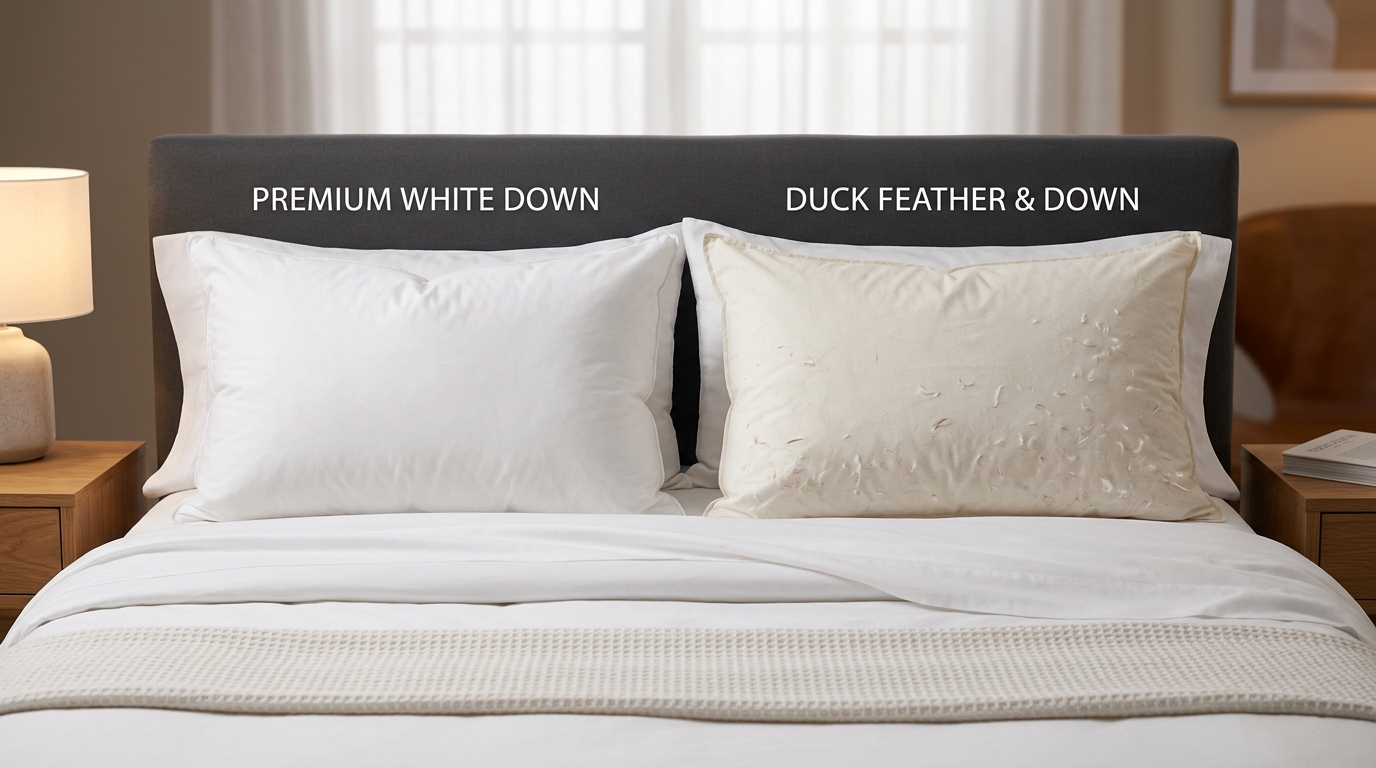
The last layer is the one your head and shoulders meet, and it has a real job: the gap between your shoulders and the duvet is where most warm air escapes.
- Flannel or brushed pillowcases on your sleeping pillows — same logic as Layer 2: warm on contact, no cold shock when you turn the pillow.
- Pillow arrangement: two sleeping pillows per person, with any decorative cushions in front during the day. At night, sleeping pillows propped slightly against the headboard close the shoulder gap better than pillows lying dead flat.
- A folded spare blanket across the pillows or on a bench at the foot of the bed is the old hotel trick — within arm’s reach at 3 a.m. without a trip to the linen closet.
- Festive styling (optional): in December this is the layer where a plaid cushion or a seasonal throw does all the visual work, so the base bedding can stay neutral — our Christmas bedding ideas guide builds a whole holiday look on exactly this principle.
Adjusting the System: Hot Sleepers, Guest Rooms and Budgets
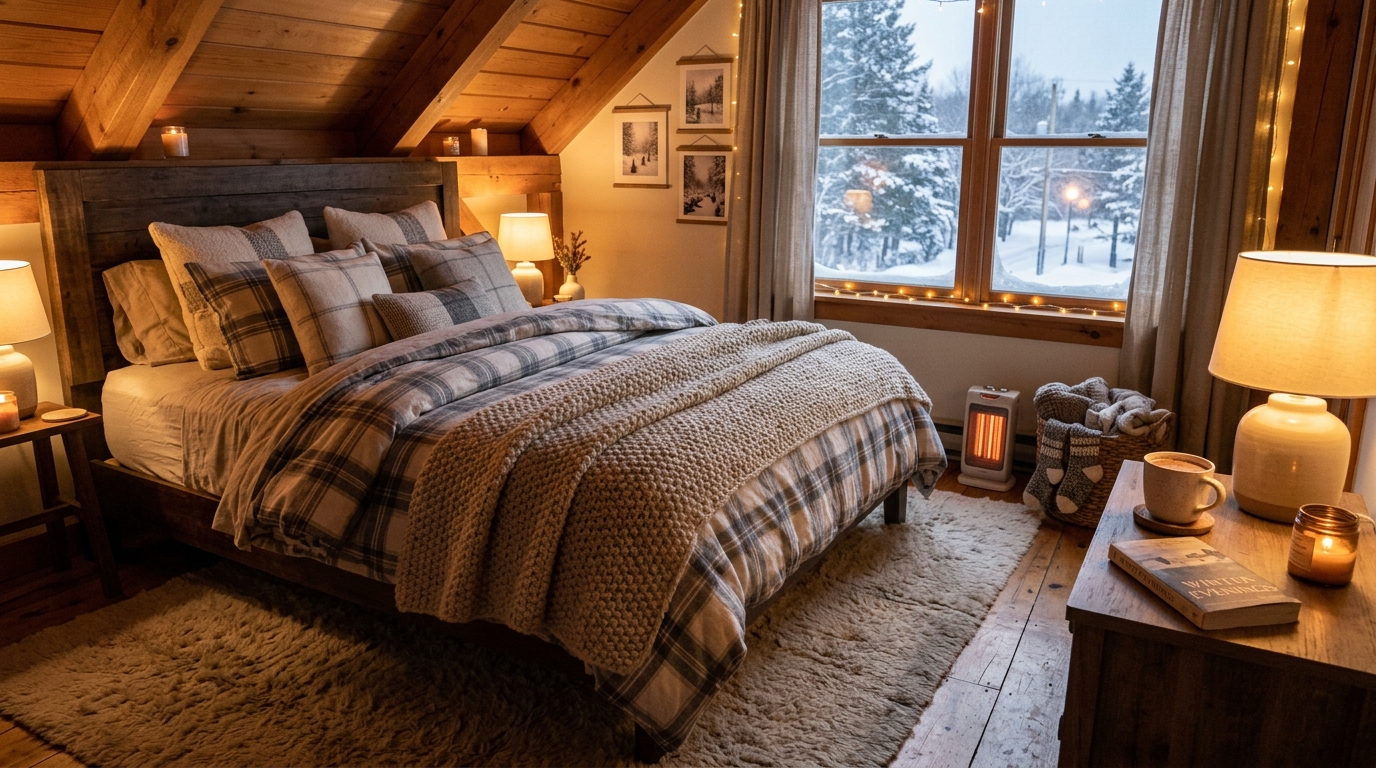
If you sleep hot. Keep the structure, change the materials. Swap flannel sheets (Layer 2) for cotton percale or a lightweight ~140 GSM flannel, drop Layer 5 entirely, and choose the lighter half of an all-season duvet set as your Layer 4. You keep the adjustable middle layer (Layer 3) — hot sleepers benefit from peelable layers more than anyone.
If you sleep cold. Go up one band everywhere: heavyweight flannel (190+ GSM), the full combined all-season duvet or a 13.5–15 tog class duvet, and add a heated mattress pad under Layer 1 or a hot-water bottle at the foot of the bed 20 minutes before you get in. Warming the bed before you enter it works better than any single blanket.
For a guest room. Guests can’t tell you the bed was wrong until morning, and everyone sleeps at a different temperature — so layers are the hospitality. A midweight duvet (Layer 4) plus the quilt (Layer 5) plus the foot throw (Layer 6) lets each guest build their own warmth. Leave the spare folded blanket (Layer 7) visible so nobody has to ask.
On a budget. Prioritize in this order: flannel sheets first (typically $30–$90 and felt all night), then the middle flat sheet/blanket, then the throw. The duvet you already own, with a quilt over it and the gaps sealed, will outperform its price — upgrade Layer 4 last, when sales hit.
5 Layering Mistakes That Make a Winter Bed Worse
- Buying for the forecast instead of the room. A 15-tog duvet in a 68 °F heated bedroom guarantees sweaty 2 a.m. wake-ups. Measure the room first (see the start of this guide).
- One huge layer instead of several thin ones. All-or-nothing warmth, no adjustment, and a bed that’s miserable on the milder half of winter nights.
- Forgetting the cold from below. No topper in a cold room means the mattress drains heat all night while you pile blankets on top and wonder why you’re still cold.
- Sealing yourself in synthetics. Cheap microfiber everything — sheets, duvet, throw — traps moisture as well as heat. Keep at least the skin-contact layers (2 and 3) natural and breathable.
- Ignoring pocket depth. A topper plus a thick winter mattress setup will defeat a standard fitted sheet; popping corners at 3 a.m. undo all your layering. Measure, then buy deep-pocket sheets.
Frequently Asked Questions
How many layers of bedding do you need for winter?
For most people, five to seven: a topper, warm sheets, a light middle layer, a winter-weight duvet, and a throw — with a quilt over the duvet and pillow layers added in colder rooms. The exact count matters less than covering each job (insulate below, warm the skin layer, insulate above, seal the edges) once.
What is the warmest bedding combination for very cold rooms?
Heavyweight flannel sheets (190+ GSM), a mid-layer blanket, a 13.5–15 tog class duvet (or roughly 700+ fill power down), a quilt over the top to seal the edges, and a wool or fleece topper underneath. Pre-warming the bed with a heated pad or hot-water bottle makes the same bedding feel a full step warmer.
Are flannel sheets better than a thicker duvet?
They do different jobs. Flannel fixes the contact problem — the bed feels warm the second you get in — while the duvet provides the bulk of the insulation. If you can only change one thing, change the sheets: they’re cheaper and you feel them all night.
What GSM should flannel sheets be?
Around 140 GSM is lightweight (mild winters, warm sleepers), around 170 GSM is the midweight sweet spot for most heated homes, and 190 GSM or more is heavyweight flannel for cold rooms and cold sleepers. GSM — weight per square meter — is a more honest guide than thread count for flannel.
How do I stop overheating under winter bedding?
Layer, don’t pile: keep the middle flat sheet or light blanket so you can sleep under that alone, choose breathable natural fibers next to your skin, and drop one upper layer rather than turning the heating down for the whole house. If you regularly wake up sweating, your duvet is one warmth class too high for your room temperature.
When should I switch to winter bedding?
Whenever your bedroom regularly drops below about 65 °F overnight — for most US homes that’s sometime in October or November, which is also when flannel and winter duvets go on seasonal sale ahead of Black Friday.
The Short Version
A warm winter bed isn’t bought, it’s assembled: insulate from below with a topper, put brushed flannel (around 170 GSM) against your skin, keep a light middle layer for adjustment, let a proper winter-weight duvet do the heavy lifting, seal it with a quilt, park a throw where your feet live, and finish with warm pillowcases and a spare blanket in reach. Build it once, and every cold night from now to March is just a matter of peeling or adding a layer.
Care note for spring: when the season turns, wash and fully dry your winter layers before storing — our guide to washing a down comforter without clumping walks through the duvet part step by step.