Silk vs Satin Pillowcase for Hair Loss: Which Material Prevents Hair Breakage?
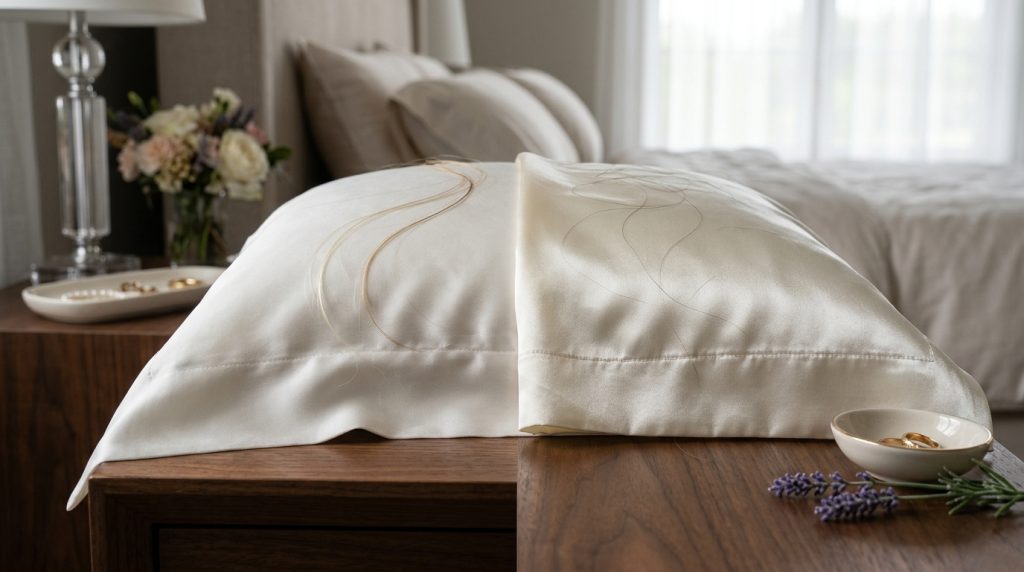
Sleeping on the wrong fabric tugs at fragile hair shafts overnight. A silk vs satin pillowcase for hair loss comparison comes down to surface friction, breathability, and moisture retention.
Pure Mulberry silk uses natural protein fibers that let hair strands slide without pulling. Synthetic satin mimics that smooth surface using woven polyester, giving you low friction at a lower price point.
Both materials reduce mechanical hair tugging compared to rough cotton. Choosing between them depends on your hair density, budget, and wash routine.
Key Differences Between Silk and Satin Pillowcases
Silk is a natural animal fiber spun by silkworms. Satin is not a raw material; it is a weave pattern created using polyester, nylon, or rayon threads.
Understanding how these construction methods differ helps you choose the right fabric for thinning hair.
| Feature | Mulberry Silk Pillowcase | Polyester Satin Pillowcase |
|---|---|---|
| Fiber Type | Natural protein fiber (silkworm) | Synthetic polymer (polyester/nylon) |
| Weave Surface | Naturally smooth protein threads | Tight satin weave over synthetic threads |
| Friction Level | Lowest possible surface friction | Very low surface friction |
| Moisture Retention | Retains natural hair oils | Does not absorb oils; traps heat |
| Breathability | High natural airflow | Lower airflow; retains warmth |
| Price Range | $30 – $90 per pillowcase | $9 – $20 per pillowcase |
| Care Routine | Hand wash or gentle silk cycle | Machine washable on normal cycle |
How Hair Friction Causes Nighttime Breakage
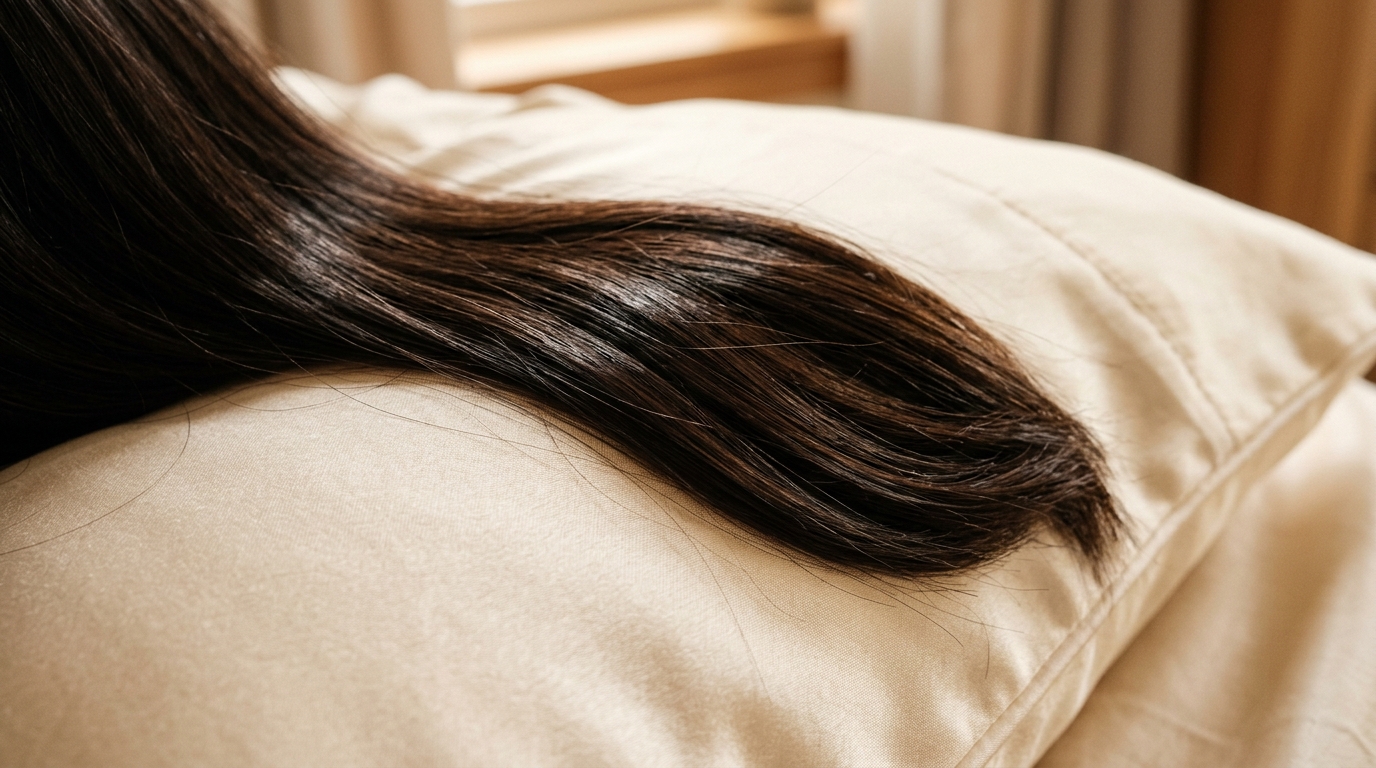
Cotton pillowcases feature jagged microscopic fibers. When you turn during sleep, cotton grabs individual hair strands, creating friction knots and snapping delicate shafts.
For people experiencing hair thinning, this mechanical stress accelerates hair shedding across vulnerable areas like the crown and hairline.
Surface Friction Test Results
Cotton fabric exhibits a high friction coefficient. It grabs hair cuticles during toss-and-turn movement, stretching shafts until they snap.
Polyester satin features a low friction coefficient. Hair glides across the surface, but synthetic threads generate static electricity during dry winter nights.
Mulberry silk (22 Momme) offers the lowest friction coefficient available. Hair strands slide across the fabric without static build or mechanical tension.
Fiber Science: Silk vs Satin Construction
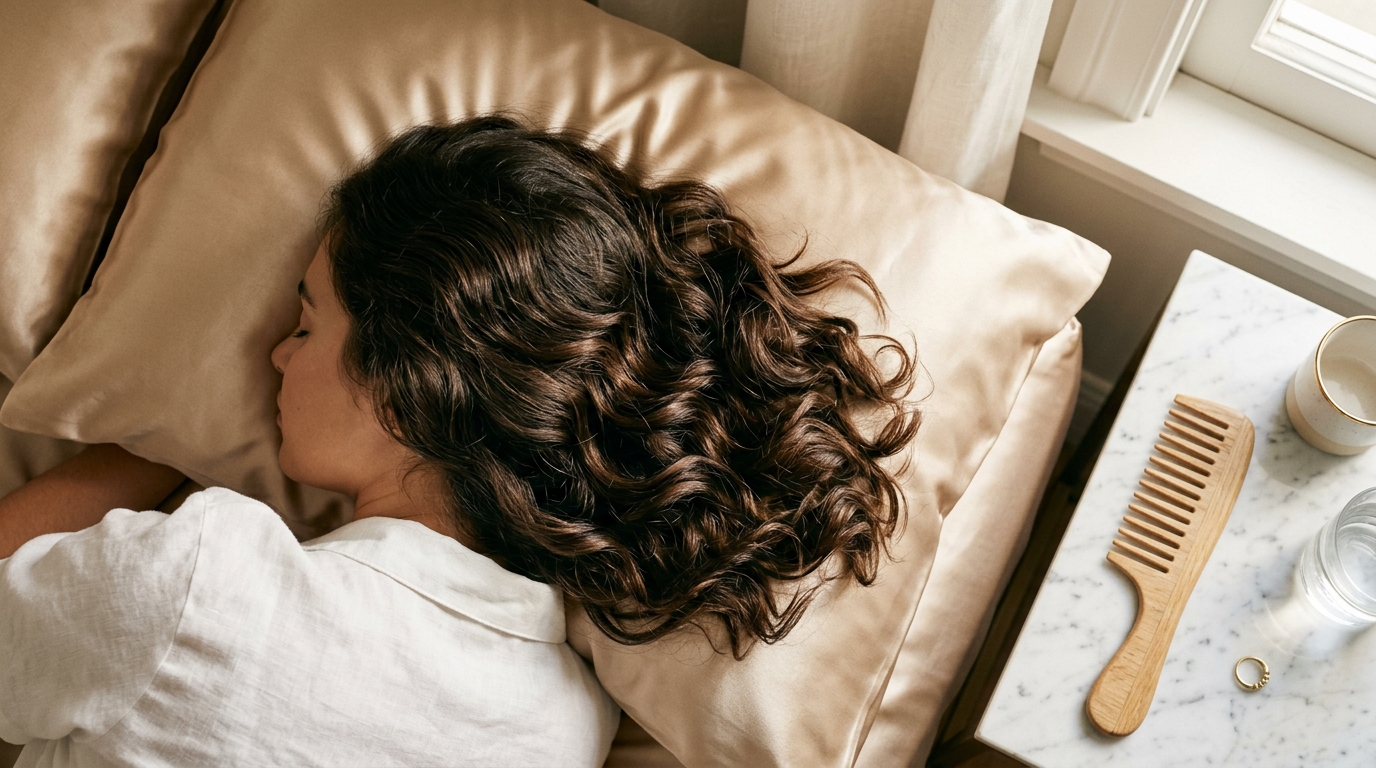
Mulberry silk fibers consist of long strands of natural fibroin protein bonded by sericin. This protein structure matches human skin and hair composition closely.
The natural smooth surface prevents cuticles from lifting. Smooth cuticles prevent tangles, split ends, and thinning hair roots over time.
Synthetic satin relies on extruded petroleum products. Woven polyester filament creates a shiny finish that feels soft initially.
Polyester lacks microscopic breathability pores. Heat builds up under your neck, triggering nighttime scalp sweating.
Fabric Weave Terminology and Manufacturing
Understanding pillowcase manufacturing clarifies why pricing varies widely between natural silk and synthetic satin.
Charmeuse silk refers to a specific weaving technique. It features a satin finish on the front and a dull matte finish on the back. Charmeuse silk offers smooth glide for delicate hair.
Polyester satin uses filament yarn spun from synthetic chemicals. Factories weave these threads on high-speed industrial looms, producing large quantities at low cost.
Rayon satin and bamboo satin use plant cellulose as base raw materials. They breathe better than polyester satin, but lack the natural amino acid structure found in pure Mulberry silk.
Moisture Retention and Scalp Health
Hair strength relies on balanced hydration. Dry hair cuticles snap under mild tension, making hydration management important for hair retention.
Mulberry Silk Moisture Behavior
Natural silk contains sericin, a natural coating that resists liquid absorption. Silk leaves natural oils inside your hair shaft instead of soaking them up.
Your scalp maintains its natural protective oils throughout eight hours of sleep. This prevents the dry, flaky scalp conditions that weaken hair follicles.
Synthetic Satin Moisture Behavior
Polyester satin does not absorb liquids easily, so hair oils stay on top of the fabric.
Synthetic weaves block natural airflow. Heat buildup causes scalp sweating, which clogs hair follicles if you have sensitive skin or seborrheic dermatitis.
Scalp Microbiome Impact and Hygiene
Scalp health directly influences follicle strength. Fabric choice affects how moisture, sebum, and skin cells accumulate overnight.
Silk fibers naturally resist dust mites, mold, and fungus. The smooth protein structure discourages bacterial growth, keeping your scalp clean between washings.
Satin fabrics hold heat, creating a warm, damp environment. Nighttime sweat builds up on the non-absorbent synthetic surface.
This excess surface moisture promotes bacterial growth. Clean your satin pillowcase frequently to prevent scalp pimples and clogged root pores.
Mulberry Silk Momme Weight Explained
When shopping for a silk pillowcase, momme measures fabric density and weight per unit area. Higher momme means denser silk strands.
16 to 19 Momme represents lightweight silk. It feels smooth, but wears thin after frequent washing cycles.
22 Momme is the ideal benchmark for hair care. Thick threads withstand daily use while staying supple against fragile hair.
25 to 30 Momme represents heavyweight luxury silk. It is durable, but feels stiffer under your face.
Select a 22 Momme Grade 6A Mulberry silk pillowcase for hair friction prevention.
Hair Type Compatibility Guide
Different hair textures respond differently to silk and satin surfaces overnight. Matching your hair type to the right pillowcase optimizes hair protection.
Fine and Thinning Hair
Fine hair shafts snap under low mechanical force. Mulberry silk provides the lowest friction resistance, making it ideal for fine or thinning hair.
Curly and Textured Hair
Curly hair cuticles sit higher along the hair shaft. Silk preserves curl definition by retaining natural oils and preventing morning frizz.
Satin works well for curly textures on a budget, provided you wear a protective bonnet underneath.
Color-Treated or Chemically Processed Hair
Bleached and color-treated hair loses natural elasticity. Silk reduces surface drag, preventing fragile processed ends from snapping overnight.
Care and Washing Instructions
Proper washing maintains fabric smoothness over years of nightly use. Harsh detergents ruin the low-friction finish on both silk and satin.
How to Wash Silk Pillowcases
Hand wash silk pillowcases in lukewarm water using a pH-neutral liquid silk soap. Avoid bleach or heavy stain removers.
Gently press out excess water without wringing the fabric. Hang dry in a shaded area away from direct sunlight.
How to Wash Satin Pillowcases
Machine wash polyester satin pillowcases on a gentle cycle using cold water. Use a mesh laundry bag to prevent snagging on zippers.
Tumble dry on low heat or line dry. Avoid fabric softeners, as chemical residues degrade the satin weave glide over time.
Pros and Cons Comparison
Mulberry Silk Pillowcases
Pros include natural breathability, zero static electricity, gentle friction reduction, and natural scalp oil preservation.
Cons include higher purchase price, special washing care requirements, and susceptibility to liquid water spot stains.
Satin Pillowcases
Pros include budget-friendly pricing, easy machine washing, wide color selection, and good friction reduction compared to cotton.
Cons include heat trapping, static electricity generation, and faster surface degradation after multiple washings.
Which Pillowcase Should You Buy?
Pick a Mulberry silk pillowcase if you have fine hair, scalp sensitivity, or noticeable hair thinning. Natural airflow and zero static prevent hair breakage during sleep.
Pick a satin pillowcase if you want a budget-friendly option to stop cotton friction without spending over twenty dollars.
Frequently Asked Questions
Does a silk pillowcase stop hair loss completely?
No pillowcase cures genetic or hormonal hair loss. A silk pillowcase prevents mechanical hair breakage and split ends caused by pillow friction.
Is satin as good as silk for hair growth?
Satin offers a similar slick surface that stops hair pulling. However, silk provides better temperature regulation and natural protein fibers that reduce static buildup.
What momme silk is best for hair loss?
A 22 Momme Mulberry silk pillowcase delivers the ideal balance of smooth texture, durability, and friction reduction.
How often should you wash a silk pillowcase?
Wash your silk pillowcase every seven days using a pH-neutral silk detergent and cold water to maintain fiber smoothness.
Can satin pillowcases cause acne or scalp breakouts?
Polyester satin traps heat and sweat against your skin. If you sweat at night, unwashed satin pillowcases can harbor bacteria that trigger breakouts.
Why does my hair feel static on a satin pillowcase?
Synthetic polyester threads store electrical charge when rubbed against dry hair. Natural silk does not store static electricity.