How to Get Yellow Sweat Stains Out of White Pillows: Deep Cleaning Removal Guide
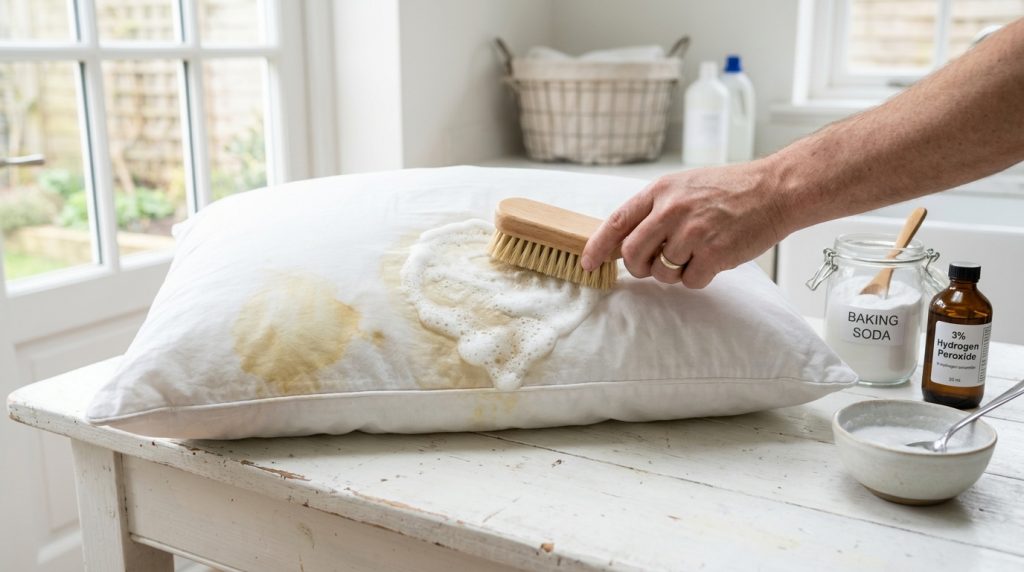
Over time, pristine white pillows develop unsightly discolored patches. Learning how to get yellow sweat stains out of white pillows restores your bedding hygiene without destroying inner fill fibers. Yellow discoloration occurs when body perspiration, facial oils, drool, and skincare products soak through pillowcases into pillow shells overnight.
As sweat evaporates, organic urea and mineral salts react with oxygen, creating stubborn yellow oxidized marks.
Using baking soda, hydrogen peroxide, and oxygen-based stain soak solutions breaks down set-in yellow discoloration safely.
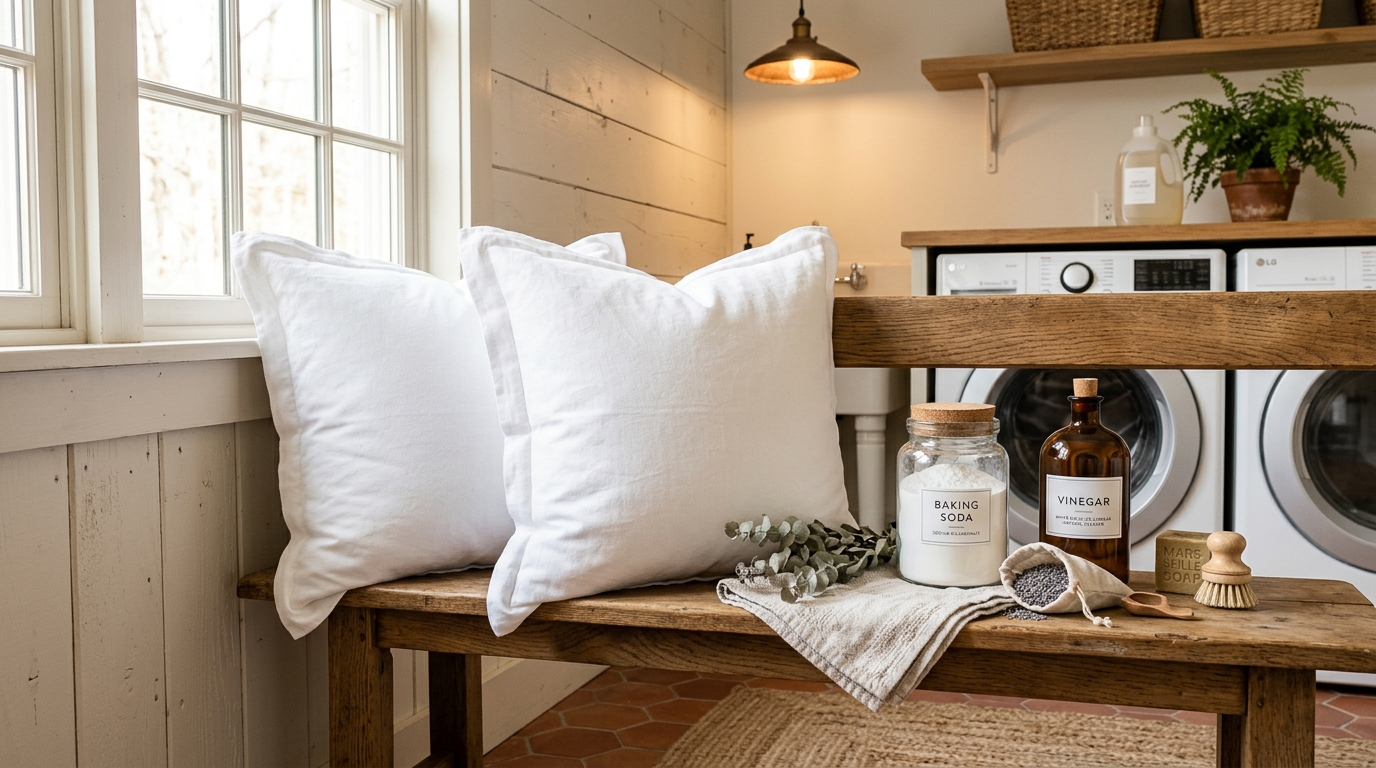
Why Pillows Turn Yellow Over Time
Understanding the root causes of yellow pillow discoloration helps prevent future stains from forming.
| Discoloration Source | Chemical Mechanism | How It Penetrates Pillows |
|---|---|---|
| Nighttime Perspiration | Urea, salt, and water oxidation | Seeps through woven pillowcase threads |
| Sebum & Facial Oils | Lipid buildup and rancidification | Transfers directly from skin and hair |
| Saliva & Drool | Protein enzyme residue | Soaks deep into inner fill cores during sleep |
| Skincare Products | Benzoyl peroxide & oil reactions | Bleaches or yellows white cotton fabric |
| Wet Hair Sleeping | Moisture trapping & damp mold | Transfers water into pillow ticking |
Pre-Treatment: Baking Soda and Hydrogen Peroxide Paste
For localized yellow patches, apply a potent natural pre-treatment paste before machine washing.
Mix one-half cup of baking soda with one-quarter cup of 3% hydrogen peroxide. Stir until a thick paste forms.
Spread the paste directly over yellowed areas using a soft laundry brush. Allow the mixture to sit for thirty minutes.
Hydrogen peroxide acts as a safe color-safe bleaching agent. Baking soda lifts stubborn protein and oil residues from cotton fibers.
Deep Cleaning Soak Method for Severely Yellowed Pillows
When entire pillows turn yellow, a full soak cycle in hot water lifts embedded discoloration completely.
Step 1: Prepare the Soaking Solution
Fill your washing machine tub or a deep laundry sink with hot water.
Add one cup of powdered dishwasher detergent, one cup of liquid laundry detergent, and one cup of oxygen-based bleach powder.
Stir the water thoroughly until all powders dissolve completely.
Step 2: Submerge Pillows
Submerge two pillows into the soaking solution. Washing two pillows at once balances drum weight during later spin cycles.
Press pillows down into the water until air bubbles stop rising. Allow pillows to soak for two hours.
Step 3: Run a Hot Washing Cycle
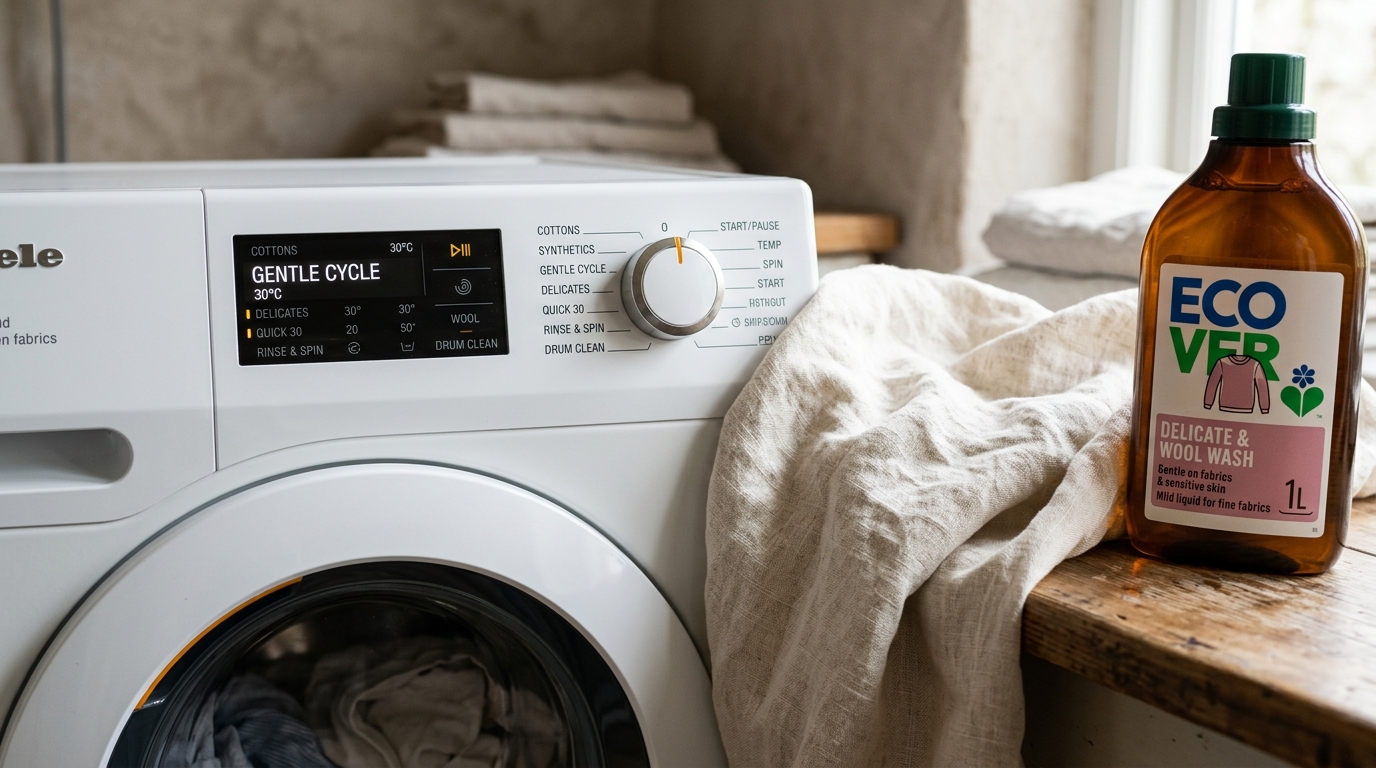
Set your washing machine to a hot water wash cycle using a gentle speed.
Add one cup of white distilled vinegar to the fabric softener dispenser. Vinegar neutralizes leftover alkaline detergent suds and brightens white cotton.
Step 4: Perform a Double Rinse
Run a second rinse cycle with clear water. Complete rinsing ensures no soap residue remains trapped inside pillow fill.
Commercial Enzyme Cleaners vs Home Remedies
Enzyme laundry sprays break down organic sweat stains at a molecular level. Protease enzymes target protein-based saliva marks, while lipase enzymes target oily sebum stains.
Home remedies like baking soda and vinegar cost less and avoid synthetic fragrances. Baking soda absorbs odors while mild acid in vinegar dissolves mineral salt deposits.
Using an enzyme spray for pre-soaking followed by an oxygen bleach wash delivers maximum stain removal on old set-in yellowing.
Machine Washing Instructions by Pillow Fill Type
Different pillow fill materials require specialized washing care.
Polyester Fiberfill Pillows
Polyester pillows tolerate hot water washing well. Wash two fiberfill pillows together using mild liquid soap on a gentle cycle.
Down and Feather Pillows
Wash down pillows in cool water using specialized down wash soap. Never use harsh chlorine bleach, which strips natural feather coatings.
Memory Foam and Latex Pillows
Never submerge solid memory foam or latex pillows in a washing machine. Mechanical agitators tear foam cores apart.
Spot clean foam pillows using a damp cloth and mild soapy water. Air dry outdoors away from direct heat.
Natural Sun Bleaching Power
Sunlight provides free natural bleaching for white laundry. Ultraviolet rays break down organic stain molecules on cotton shells.
After washing, place damp white pillows on a clean drying rack outdoors in direct sunlight.
Allow pillows to sit under sun exposure for three hours. Turn pillows over halfway through to bleach both sides evenly.
Drying Pillows to Prevent Mold and Clumping
Thorough drying is crucial after deep cleaning white pillows.
Place pillows into your dryer drum with four wool dryer balls. Dryer balls beat against damp fill, fluffing fibers evenly.
Select low heat or delicate dry settings. High heat melts synthetic polyester fibers and shrinks cotton covers.
Check interior fill dryness every thirty minutes. Squeeze pillow centers firmly to detect hidden dampness before storing.
Preventive Measures to Stop Yellow Pillow Stains
Preventing future yellow stains keeps white pillows looking fresh longer.
- Use Zippered Pillow Protectors: Encase pillows in waterproof, breathable cotton protectors under standard pillowcases.
- Wash Pillowcases Weekly: Laundering pillowcases every seven days prevents facial oil buildup.
- Never Sleep with Wet Hair: Dry your hair before bed to stop moisture transfer into pillow ticking.
- Sun-Airing Monthly: Place pillows in direct outdoor sunlight for two hours monthly. UV rays sanitize fabric and bleach mild stains naturally.
Frequently Asked Questions
Does chlorine bleach get yellow stains out of pillows?
Avoid chlorine bleach. Bleach reacts with protein in sweat, turning yellow stains darker and damaging cotton fibers.
Can you put yellowed pillows in the washing machine?
Yes. You can machine wash polyester and down pillows after pre-treating stains with hydrogen peroxide and baking soda.
How often should you wash bed pillows?
Deep clean your pillows every three to six months to remove accumulated oils and dust mites.
Why do white pillows turn yellow even with pillowcases?
Body sweat and sebum migrate through porous woven pillowcase fabric, absorbing into pillow covers overnight.
How do you get sweat smells out of pillows?
Add one cup of white distilled vinegar to the rinse cycle to eliminate trapped sweat odors naturally.
When should you replace old pillows instead of washing?
Replace pillows if fill remains lumpy after fluffing, or if foam fails to spring back when folded in half.