How to Wash a Down Comforter Without Clumping: Step-by-Step Washing Guide
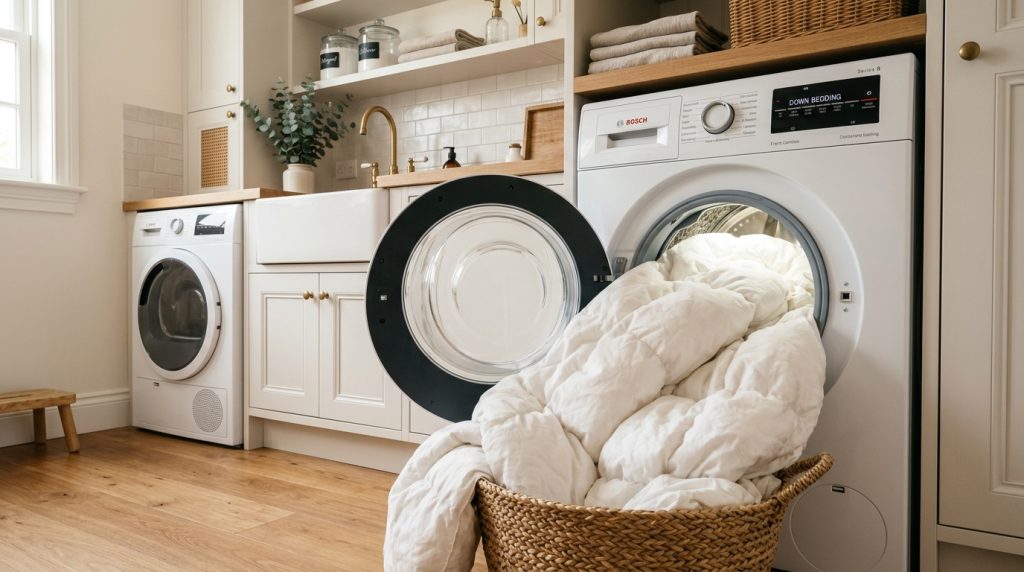
Down comforters trap warmth using tiny air pockets between goose or duck feathers. Knowing how to wash a down comforter without clumping keeps your bedding fluffy, odor-free, and insulating. Clumping happens when wet feather clusters stick together inside internal baffle box pockets during washing.
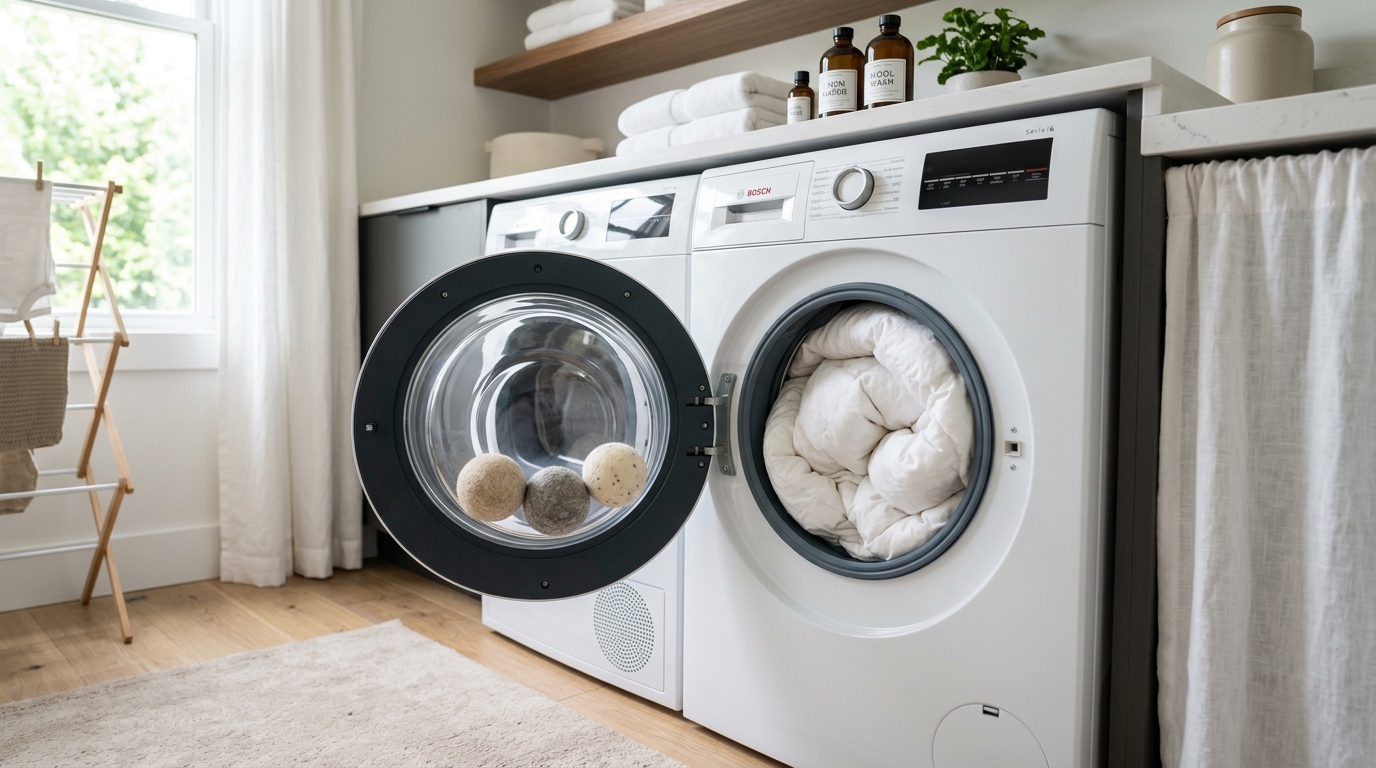
Using a front-loading washing machine, gentle down wash soap, and low-heat drying with wool dryer balls prevents clumped feathers. Air circulation restores natural loft while protecting internal down clusters.
Recommended Washing Settings for Down Bedding
Standard top-loading agitator machines pull and tear internal baffle stitching. Always select a commercial front-loading machine for thick comforters.
| Washing Parameter | Correct Setting | Why It Matters |
|---|---|---|
| Machine Type | Front-Loading or Large Capacity | Prevents fabric tearing and agitator damage |
| Water Temperature | Cool or Lukewarm (80°F) | Protects natural feather oil coating |
| Cycle Selection | Gentle / Delicate Cycle | Reduces high-speed friction and stress |
| Detergent Type | Specialized Down Wash (Enzyme-Free) | Prevents stripping natural feather oils |
| Rinse Cycle | Double Rinse Cycle | Removes all soap residues from down clusters |
| Spin Speed | Medium Spin Speed | Extracts water without damaging internal baffles |
Step-by-Step Guide to Wash Down Comforters
Following a structured washing sequence prevents heavy wet down from balling up inside quilt corners.
Step 1: Inspect Comforter Stitching
Examine all seams for tears or loose threads before washing. Mend open seams to prevent feathers from spilling into the washing drum.
Spot treat visible stains using mild dish soap and cold water. Rub fabric gently with a soft sponge.
Step 2: Load the Machine Properly
Place your down comforter into the front-loading drum loosely. Do not fold or wrap the comforter tightly around itself.
Add two clean white towels to balance drum weight during spin cycles. Balanced loads prevent machine shaking.
Step 3: Add Gentle Down Soap
Pour two tablespoons of down wash detergent into the soap dispenser dispenser drawer. Avoid standard harsh laundry detergents.
Standard laundry soaps strip natural lanolin oils from down feathers. Stripped feathers become brittle and break easily.
Step 4: Run a Double Rinse Cycle
Select a delicate cycle with cool water. Set your machine to perform two complete rinse cycles.
Residual soap suds glue wet feather barbs together. Thorough rinsing leaves feathers clean and free to expand during drying.

Commercial Laundromat Washing Benefits
Home washing machines often lack drum capacity for Queen or King down comforters. Cramming bedding into small drums prevents thorough water circulation.
Commercial front-load washers at laundromats provide extra volume. Large drums let water flow through heavy down layers freely.
Extra drying space also accelerates moisture removal. Larger commercial dryers tumble comforters without trapping heat pockets.
Real Down vs Down Alternative Washing Differences
Understanding fill material prevents accidental damage during laundering cycles.
Goose down requires gentle non-enzyme detergent. Natural feathers rely on lanolin oils to stay flexible.
Polyester down alternative fills tolerate standard liquid detergents. Synthetic microfibers do not strip oils, but melt under high dryer heat.
Always verify your comforter tag before selecting wash temperatures.
Drying Down Comforters to Restore Loft
Drying is the most critical phase when washing down bedding. Incomplete drying causes mildew growth and persistent feather clumping.
Use Wool Dryer Balls or Clean Tennis Balls
Place three to four wool dryer balls inside the dryer drum. You can also place clean tennis balls inside white socks.
As the dryer rotates, dryer balls break up wet feather clumps continuously. This mechanical agitation restores loft evenly across baffle boxes.
Select Low Heat Drying Cycles
Set your dryer to low heat or delicate tumble dry. High heat singes feather tips and shrinks cotton shell fabrics.
Expect the drying process to take three to four hours. Patience prevents interior dampness.
Pause and Fluff Every Thirty Minutes
Stop the dryer every thirty minutes during tumble drying. Take out your comforter and shake it vigorously from both ends.
Manual fluffing redistributes down clusters into box corners. It also lets trapped steam escape from inner layers.
How to Fix Clumped Down After Washing
If your comforter emerges from the dryer with hard lumps, wet down remains trapped inside inner baffle pockets.
Method 1: Additional Low Heat Drying
Return your comforter to the dryer with four dryer balls. Run an extra forty-minute low-heat cycle.
Method 2: Manual Hand Massage
Lay the comforter flat on a clean bed. Locate individual down clumps through the outer shell.
Gently massage the lump between your thumbs and fingers. Separate the wet feather clusters until down spreads evenly across the baffle square.
Method 3: Sun Airing
Hang your comforter outdoors on a warm sunny day. Natural breeze and mild sunlight evaporate leftover core moisture.
Ensure the weather is dry and clear before hanging bedding outside.
Preventing Mildew and Odors in Down Bedding
Trapped moisture causes sour odors and mildew spores inside down fill.
Never store a down comforter in a sealed plastic bag immediately after drying. Allow bedding to air out indoors for twenty-four hours before storage.
Store seasonal comforters in breathable cotton storage bags. Good air circulation prevents moisture buildup during summer months.
Frequently Asked Questions
Can you wash a down comforter in a top-loading washing machine?
Avoid top loaders with center agitators. Agitators twist fabric, tearing internal baffle walls and clumping down feathers.
Why is my down comforter flat after washing?
Interior feathers remain damp. Run additional low-heat dryer cycles with wool dryer balls to restore full loft.
How often should you wash a down comforter?
Wash your down comforter once every one to two years if you use a protective duvet cover daily.
Can you use liquid fabric softener on down bedding?
Never use fabric softener or bleach. Softeners coat down fibers with waxy film, flattening feathers permanently.
What is the best soap for washing down comforters?
Use an enzyme-free down wash soap designed for natural feather insulation.
How do tennis balls help when drying down comforters?
Tennis balls bounce against tumbling down, beating apart wet feather clusters before they dry into hard lumps.